
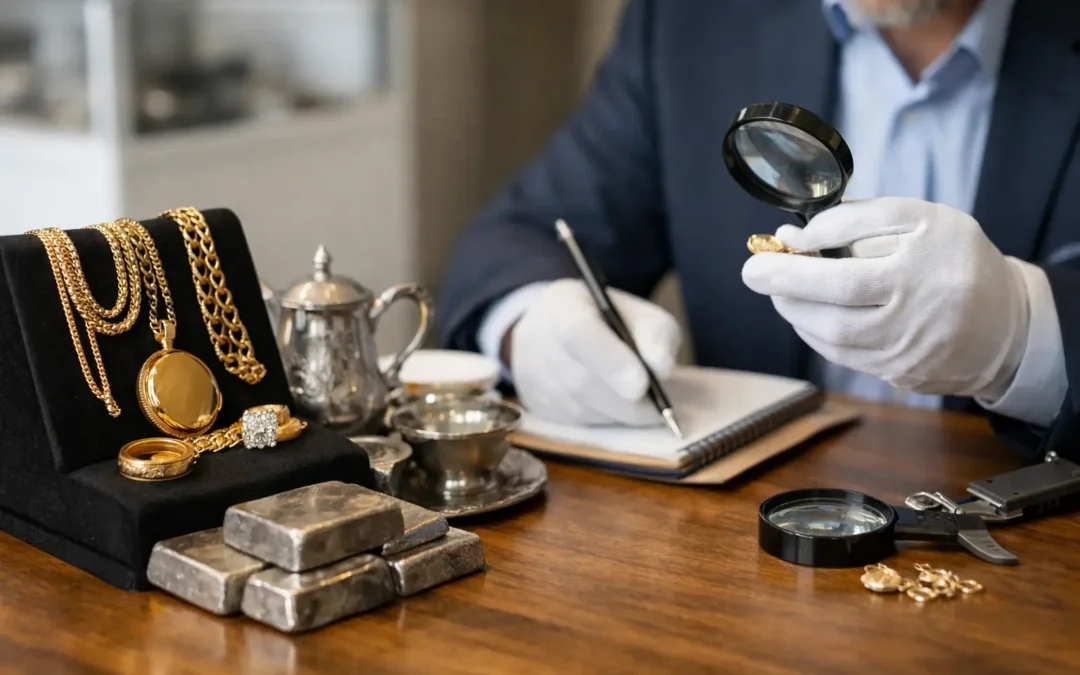
A tray of mixed jewellery, a box of silver flatware, a handful of sovereigns in a drawer – these are the sort of groups that often arrive for appraisal with no clear idea of what they may achieve. Gold and silver auctioneers are not simply weighing metal and issuing a figure. They are judging a combination of bullion content, craftsmanship, maker, rarity, condition and current demand, and those factors can produce very different outcomes at auction.
For sellers, that distinction matters because an item sold purely for scrap may forfeit a premium attached to design, date or provenance. For buyers, the same distinction explains why two pieces with similar weights can attract markedly different bidding. The market for gold and silver sits at the point where precious metal value meets collecting interest, and proper valuation begins with understanding which side of that balance carries more weight.
What gold and silver auctioneers are actually assessing
At first glance, gold and silver appear straightforward categories. Gold is measured by purity and weight. Silver is often identified by hallmarks and weighed accordingly. Yet auction practice is more exacting than that, because the estimate placed on a lot must reflect how bidders are likely to respond, not merely what the metal could fetch if melted.
A gold chain, for example, may be valued largely on carat and gram weight if it is a modern, machine-made piece with little design interest. By contrast, an early 20th-century necklace by a recognised maker may draw competitive bidding well above intrinsic metal value. The same applies to silver. A quantity of damaged or incomplete table silver may track close to bullion value, while a Georgian coffee pot with crisp engraving and a desirable maker’s mark belongs to an entirely different market.
This is why experienced auctioneers begin with object identification rather than a calculator. They look at what the lot is, when it was made, who made it, how it survives, and whether collectors are active in that field. Only then does weight become one part of the picture.
Hallmarks, assay marks and purity
For silver in particular, hallmarking is central. British hallmarks can identify standard, assay office, date letter and maker, allowing an auctioneer to place an object within a precise historical and commercial context. That matters because an 18th-century provincial silver piece may carry collector appeal entirely separate from weight.
Gold marks require similar care. Carat standards such as 9ct, 14ct, 18ct and 22ct are familiar enough, but older pieces can present worn marks, foreign assay systems or later alterations. A competent appraisal often involves testing, close inspection and comparison with known manufacturing styles. Misreading purity affects value immediately, so caution is part of professional practice.
There are also instances where a piece is partly precious metal and partly not. Filled, plated or mounted objects need to be described accurately. Silver plate has a market, but not the same basis of value as solid silver. Likewise, a gold-mounted object may derive most of its value from the underlying item rather than the mount itself.
When marks are absent or unclear
Not every object arrives neatly hallmarked. Wear, repairs and foreign manufacture can obscure the evidence. In such cases, auctioneers rely on testing, construction methods, style and comparative knowledge. That is where specialist handling has real value. An apparently unremarkable box or bracelet may prove more interesting once its age and origin are properly understood.
Condition, completeness and originality
Condition does not affect every lot in the same way. In bullion-driven pieces, damage may have limited impact provided weight and purity remain clear. In collectable silver and jewellery, however, repairs, losses, dents, thinning, replacement parts and over-polishing can materially reduce buyer confidence.
Originality matters just as much. A silver tea service with matched dates and makers is generally stronger than an assembled set. A coin bracelet made from sovereigns may contain gold, but it no longer appeals to coin collectors in the way separate coins might. A Victorian brooch with its original fittings and fitted case can carry more commercial strength than a converted example, even if the metal content is identical.
Auctioneers must therefore decide which market is most likely to respond. Some pieces are best offered as design-led jewellery, some as silverware, some as numismatic material, and some in grouped lots where the appeal lies in accumulation rather than singular distinction.
Maker, period and category can outweigh scrap value
This is the point many first-time sellers underestimate. Precious metal content sets a floor, but not necessarily the final result. Well-made objects in strong collecting categories can sell far beyond melt value because buyers are paying for workmanship, history and scarcity.
Among silver, desirable categories often include early candlesticks, tapersticks, tankards, vinaigrettes, caddies, provincial pieces and good 20th-century design. In jewellery, signed pieces, period diamond rings, well-drawn Art Deco work and unusual gem-set items frequently attract stronger bidding than generic modern gold. Coins, medals and presentation pieces occupy their own specialist markets again.
Equally, there are cases where the reverse is true. Ordinary broken chains, single earrings, damaged napkin rings or heavily worn serving pieces may be governed chiefly by metal value. Good auctioneers will say so plainly. Commercially sound advice is not about inflating expectations. It is about identifying where the premium genuinely lies.
How estimates are set in practice
The estimate placed on a gold or silver lot is a market judgement. It reflects previous auction results, current bidder appetite, metal prices, rarity and the likely depth of bidding for that specific object. It is not a guarantee, and it should not be confused with insurance replacement value, retail pricing or an informal offer from a dealer.
For sellers, the key point is that estimate strategy influences the sale. A sensible estimate can encourage participation and competition. An over-ambitious estimate may suppress interest before bidding begins. This is particularly true online, where buyers compare lots quickly and often know their categories well.
Reserve prices need the same discipline. There are occasions when a reserve is prudent, especially for better pieces, but a reserve set too high can leave a lot unsold despite genuine market interest. The best results usually come when valuation is grounded in live demand rather than sentiment.
Why auction can suit gold and silver sellers
Private sale and scrap channels each have their place, but auction offers a distinct advantage when an item may attract more than metal buyers. Competitive bidding tests the open market. That is especially useful for estate jewellery, antique silver, sovereigns, presentation wares and mixed collections where one or two overlooked items may carry stronger specialist appeal than the family realises.
It is also an efficient route for grouped property. Executors and families dealing with house contents or inheritance matters often need clarity, proper cataloguing and a structured sale process rather than ad hoc disposal. In those circumstances, a reputable regional auction house can assess what should be sold individually, what should be grouped, and what is best treated on a bullion basis.
What sellers should do before seeking a valuation
Resist the urge to clean silver aggressively or to separate jewellery into what appears valuable and what does not. Tarnish, cases, receipts, presentation inscriptions and original boxes can all help an auctioneer form a clearer view. Over-cleaning may damage surfaces and reduce appeal, especially on older silver.
If you have provenance, however modest, keep it with the object. A note that an item was presented by a local institution, purchased from a known jeweller, or kept within one family can be useful. Not every story adds value, but verifiable context often improves cataloguing and buyer confidence.
Where there is a larger holding, it is worth having the collection reviewed as a whole. Gold and silver auctioneers regularly find that value sits in the relationship between pieces as much as in any single lot. A service, a set of medals, or a run of coins may be stronger intact than broken up. In other cases, separating categories produces the better result. It depends on the material.
What buyers watch for in gold and silver sales
Buyers tend to separate quickly into camps. Some are trading on metal value, some on decorative appeal, some on scholarship and rarity. The most competitive lots usually attract interest from more than one group at once. A rare silver box with clean hallmarks and attractive design, for instance, can appeal to collectors, dealers and interior buyers alike.
Online bidding has widened that audience significantly, but it has also made accuracy in cataloguing more important. Weight, dimensions, marks, condition and clear photography all influence confidence. Established firms such as John Nicholson’s understand that a serious bidder will look for precise description rather than sales language. In a category where small details can alter value materially, disciplined cataloguing is part of the service.
If you are buying, remember that not every premium lot is underpinned by bullion logic. Sometimes you are paying for rarity. Sometimes for fashion. Sometimes for a maker who has developed strong demand. Knowing which is which is part of bidding well.
Gold and silver are among the easiest categories to underestimate because they look familiar. Yet familiarity can conceal the very details that shape price. A careful valuation does more than tell you what something weighs – it tells you what market it truly belongs to, and that is often where the real value begins.