
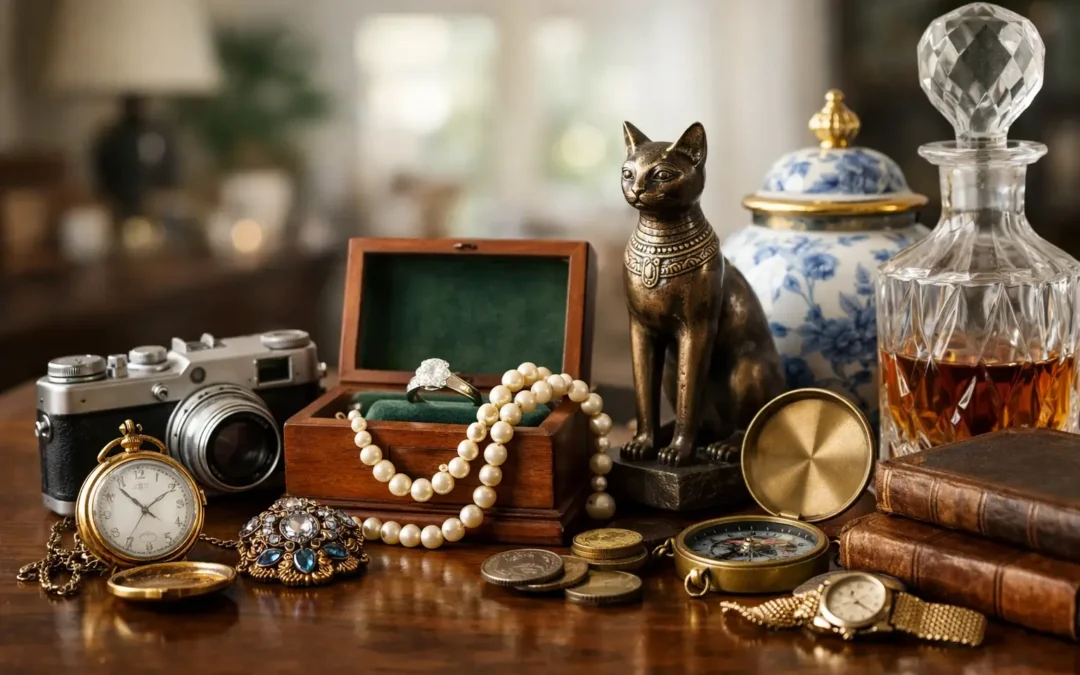
An unmarked porcelain bowl at the back of a cupboard, a small watercolour in a drawer, or a box of medals kept after a relative’s death can be easy to dismiss. Yet rare objects worth selling are frequently found among possessions that have been lived with for decades, particularly where an inheritance, house clearance or downsizing has brought long-forgotten items back into view.
The first task is not to decide what something is worth. It is to avoid making a decision that cannot be reversed. Cleaning, polishing, repairing, disposing of packaging or separating objects from their paperwork can all affect how a specialist assesses an item and how buyers respond to it at auction.
What makes an object rare enough to sell?
Age alone does not create value. A Victorian object may be attractive and well made, but thousands of similar examples may survive. Conversely, a relatively recent piece of studio glass, a limited-edition print or a first edition with the right dust jacket may attract serious interest because supply is limited and collectors are actively seeking it.
Auction value is usually shaped by a combination of rarity, condition, maker, provenance and current demand. An object with a recognisable name or factory mark is often easier to place in the market, but an unmarked piece should not automatically be discounted. Chinese and Asian works, early furniture, folk art and archaeological objects are among the categories where form, materials and workmanship may matter as much as a visible signature.
Provenance can be decisive. A purchase receipt, exhibition label, old valuation, family photograph or letter may establish when and where an object was acquired. These details can distinguish an ordinary example from one with a credible collecting history. Keep associated documents, boxes, certificates and labels together, even if they appear insignificant.
Rare objects worth selling: where to look first
The most rewarding discoveries are not always displayed in a cabinet. Begin with rooms and storage areas that have been left untouched: spare bedrooms, attics, studies, garages and cupboards containing family effects. Look carefully before dividing items between relatives or sending goods to a charity shop.
Paintings, drawings and prints
Pictures deserve a close inspection, including the reverse. A label, inscription, gallery stamp, title or exhibition number can provide a useful line of enquiry. Watercolours and drawings by regional artists, works connected to recognised schools, and signed limited-edition prints can all have a market, but condition remains central. Foxing, fading, tears and amateur restoration may affect the estimate.
Do not remove a work from its frame unless there is a clear reason to do so. A period frame may add value, while old labels and handwritten notes on the backboard can assist identification. Photographs should show the front, back, signature or inscription, and any damage.
Chinese, Asian and European ceramics
Ceramics are regularly underestimated because they are often described simply as “old china”. In reality, the difference between decorative ware and a sought-after object can lie in the paste, glaze, painted decoration, reign mark, potter’s mark or a subtle feature of the shape.
Chinese porcelain, Japanese works, Islamic pottery and European factory porcelain require careful attribution. A mark may be later, spurious or simply a retailer’s stamp, so it should be considered alongside the object rather than treated as proof. Avoid washing pieces aggressively or attempting to remove old adhesive labels. Chips, hairline cracks, restoration and rubbing to gilding should be disclosed, not concealed.
Jewellery, watches and silver
Jewellery is often kept in mixed boxes, with precious pieces sitting beside costume jewellery. Hallmarks, maker’s marks, engraved dates, old watch boxes and purchase papers can all assist valuation. Gold and silver have intrinsic material value, but craftsmanship, gemstones, design period and condition may take an item well beyond scrap value.
A signed brooch, Art Deco ring, antique mourning jewel or well-preserved wristwatch can appeal to specialist buyers. Do not test metals with abrasive methods or polish silver until it is clear what it is. Natural surface patina, original fittings and crisp hallmarks are preferable to over-cleaned surfaces.
Books, manuscripts, maps and ephemera
A full bookcase may contain little of auction interest, yet one volume can change the picture. First editions, private press books, presentation copies, illustrated works, early maps, letters and manuscripts should be set aside for inspection. Condition is especially exacting in this field: original bindings, uncut edges, dust jackets and complete plates can materially affect value.
The subject can also create demand. Local history, travel, natural history, military history and literature may attract collectors, particularly where a book has a meaningful association or inscription. Never discard loose inserts, as a letter or contemporary newspaper cutting may be part of the object’s history.
Coins, medals and military items
Coins and medals should remain in their trays, envelopes or albums where possible. Their arrangement may reveal a collecting pattern, while original issue boxes and ribbons can be valuable in their own right. A coin’s date is only one part of the assessment: denomination, mint, variety, grade and metal all matter.
Military items need thoughtful handling. Medals with named documentation, uniforms, photographs, diaries and service papers are generally more informative when kept as a group. Separating a medal from its paperwork may reduce the historical and commercial strength of the offering. Certain objects are subject to legal restrictions, so a specialist should advise before sale where weapons or protected materials are involved.
Condition is not a reason to throw something away
Sellers sometimes assume that damage makes an object unsaleable. That is not always the case. A scarce clock with a tired case, a painting requiring conservation or a cracked piece of porcelain may still be worth offering if it is rare, well attributed or desirable to collectors.
Equally, restoration can reduce value if it is poorly executed or obscures original material. The sensible approach is to record the condition honestly and seek advice before commissioning work. Buyers can make an informed judgement when a catalogue description is clear; surprises after a sale are less helpful to everyone involved.
How to prepare an object for valuation
A good preliminary valuation starts with clear information. Take photographs in daylight against a plain background, including close-ups of marks, signatures, labels, damage and distinctive details. Measure the object accurately and make a note of any story attached to it: who owned it, where it came from, when it was bought and whether it has appeared in a previous sale or valuation.
Do not rely on online asking prices as evidence of market value. Many listings remain unsold, and identical-looking objects can differ greatly in date, quality and condition. Auction estimates reflect comparable results, collector appetite and the likelihood of competitive bidding, rather than a hopeful retail figure.
For objects that appear promising, specialist inspection is worthwhile. At John Nicholson’s, valuations are considered in the context of the appropriate sale category and the audience most likely to bid. That distinction matters. A general household object may be best sold with similar effects, while a strong work of art, Asian ceramic, piece of jewellery or collection may benefit from specialist cataloguing and targeted marketing.
Choose the sale route that fits the object
An auction is particularly effective where an item has rarity, a recognised maker, good provenance or the potential to attract more than one interested buyer. Competitive bidding can establish a market price openly, with online participation widening the audience beyond the local saleroom.
It is not the right route for every item. Some objects have modest value despite being old, while others may be better grouped into a single lot to make them viable for sale. A realistic reserve, appropriate estimate and accurate description are more useful than overpricing an item and hoping for an exceptional result.
Before parting with anything that seems unusual, keep it safe, keep its history with it and resist the urge to improve it. A quiet object on a shelf may have been waiting years for the right pair of eyes.