
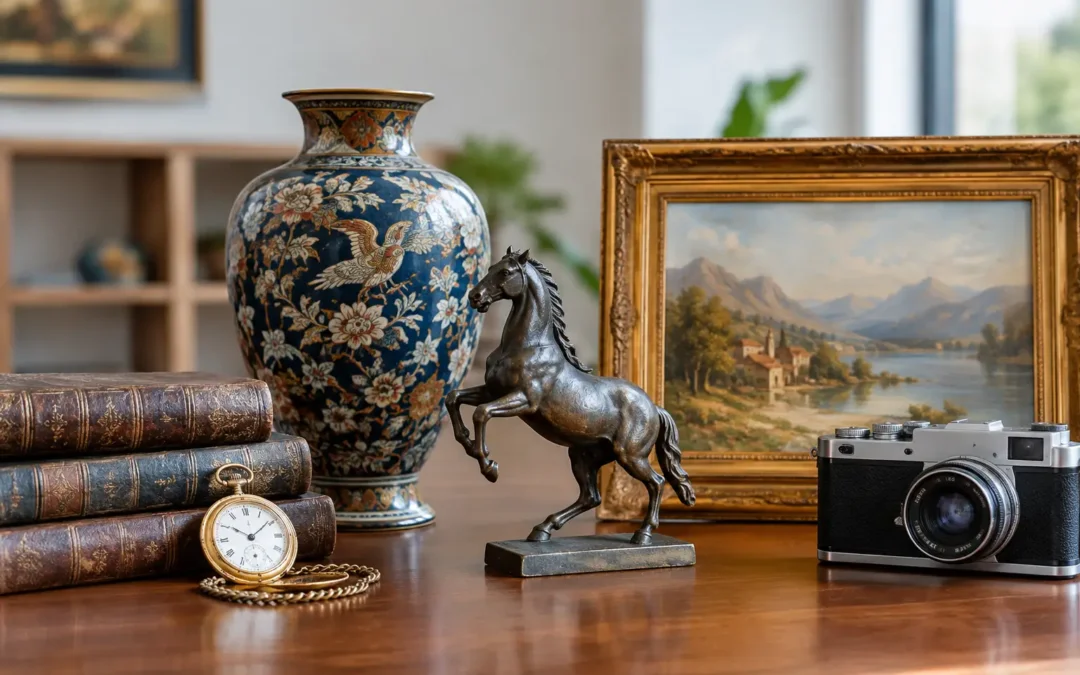
A fine eighteenth-century tea bowl, a signed silver box or a modest oil painting can each attract determined bidding, but not every old object is an investment. The best antique investment categories tend to combine rarity, condition, recognised workmanship and a market deep enough to support resale. Age alone is seldom sufficient.
For buyers, the soundest approach is to acquire objects that merit ownership regardless of short-term price movement. For executors, collectors and families considering a sale, understanding where demand is concentrated helps shape sensible valuation and consignment decisions. Auction results are useful evidence, but they are not guarantees: taste changes, condition issues emerge, and the right buyer may not be in the room on a given day.
What makes an antique investable?
An object with investment potential normally has a clear identity. It may be by a known maker, from a desirable period, made in a scarce material or supported by reliable provenance. It should also be in condition appropriate to its age and category. A rare object with serious restoration can still be valuable, but restoration must be understood and reflected in the price.
Liquidity matters as much as beauty. Fine examples in established collecting fields can be offered to an international audience and compared with past sales. Less familiar decorative objects may be charming and well made, yet harder to place when fashion moves on. The distinction is particularly relevant when buying at auction, where the hammer price is only one part of the cost. Buyers’ premium, VAT where applicable, packing, insurance and future selling costs all affect the eventual return.
Provenance is another material consideration. A documented collection history, an old exhibition label, a maker’s mark or a credible family record can distinguish one lot from another. It also reduces uncertainty. In categories subject to export restrictions, cultural-property considerations or material regulations, proper paperwork is essential rather than merely desirable.
Best antique investment categories for established demand
Fine art with quality and attribution
Paintings remain among the most closely watched fields because the best works have an established international market. British and European pictures, portrait miniatures, maritime art, sporting scenes and regional landscape painting can all perform well when the artist, subject and condition align. A fresh-to-market picture with a convincing attribution often attracts greater attention than an overexposed work with a lengthy recent auction history.
The key distinction is between decorative appeal and collectable importance. An attractive nineteenth-century landscape by an unidentified hand may furnish a room beautifully, but it does not carry the same market support as a properly signed, catalogued work by a sought-after artist. Buyers should examine surface condition, relining, retouching, frame quality and any changes to the attribution. Sellers should provide family information, invoices and labels before a valuation, as apparently minor details may strengthen a catalogue entry.
Jewellery, particularly signed and period pieces
Jewellery offers a combination of intrinsic material value and collectable design. Antique diamond jewellery, fine coloured stones, Art Deco pieces and jewels by recognised houses or designers have enduring appeal. Signed examples can command a substantial premium, but only when signatures are genuine, legible and consistent with the piece.
This category is not simply a hedge against precious-metal prices. A jewel’s value rests on its design, gemstones, craftsmanship, condition and period as well as the weight of gold or platinum. Original settings and well-matched stones are generally preferable. Later alterations, replacement stones and worn claws do not necessarily prevent a sale, but they can materially affect estimate and buyer confidence.
Jewellery can be comparatively portable and attracts a broad pool of bidders, making it one of the more practical categories for collectors who value both wearability and resale potential. Certification for important diamonds and coloured stones may be worthwhile, particularly where origin or treatment affects value.
Chinese and Asian art
Chinese ceramics, jade, bronzes, works of art and scholar’s objects remain fields where knowledge and selectivity are decisive. Fine imperial or early pieces are rare, but even more modest objects can achieve strong prices when they are well modelled, correctly dated and in untouched condition. Japanese prints, lacquer, netsuke and selected Korean ceramics also have committed collector bases.
This is a category in which provenance and condition should be investigated with particular care. A hairline crack, a ground-down mark, a replacement cover or a later decoration can transform value. Conversely, a piece with a respected old collection label or a documented inheritance may draw serious interest. General descriptions and assumptions based on appearance are not a substitute for specialist examination.
Silver and important metalwork
British and continental silver has a transparent advantage: hallmarks frequently provide a useful starting point for establishing maker, assay office and date. High-quality eighteenth-century silver, important provincial pieces, early spoons, presentation items and work by leading makers can command prices well beyond bullion value.
The market is selective. Common late Victorian tableware, particularly where condition is tired or patterns are unfashionable, may trade closer to metal value than collectors expect. The strongest results tend to be for scarce forms, crisp engraving, substantial gauge, notable provenance and desirable makers. Marks should be read in context, as later additions, erased inscriptions and repairs require proper assessment.
Clocks, watches and scientific instruments
A well-preserved longcase clock, bracket clock, carriage clock, chronometer or early wristwatch can represent serious craftsmanship and a focused collecting opportunity. Maker, movement quality, originality and working condition are central. An intact clock by a recognised maker with its original dial, hands and case will usually be more desirable than a heavily rebuilt example, even if the latter is currently running well.
Mechanical objects require continuing care, which is both their attraction and their trade-off. Servicing is part of ownership, and improper repair can reduce value. Buyers should allow for specialist maintenance rather than treating it as an unexpected expense. For sellers, original keys, winding handles, cases, receipts and service records should accompany the lot wherever possible.
Books, manuscripts, coins and medals
These categories reward precise cataloguing. In rare books, first editions, significant bindings, association copies and complete sets are usually more compelling than age alone. Dust jackets can have an outsized effect on twentieth-century literature, while defects such as foxing, loose maps or incomplete plates can greatly reduce value.
Coins and medals are similarly condition-led. Scarcity, historical importance and provenance matter, but collectors often distinguish sharply between grades. A medal group retaining original ribbons, supporting papers and family history is generally more attractive than a group broken up into separate items. These fields suit buyers prepared to study references, compare examples and buy selectively rather than accumulate indiscriminately.
Categories where caution is sensible
Antique furniture, ceramics and glass have produced exceptional results for the best examples, but broad categories can be vulnerable to changes in interior fashion. A documented Chippendale-period chair, a fine early Worcester porcelain figure or an important piece of studio glass may be highly desirable. Large brown furniture of ordinary quality, incomplete dining sets and damaged decorative ceramics can be far less liquid than their age suggests.
That does not make them poor purchases. It means the buyer should purchase for quality, scale and personal enjoyment, with resale treated as a secondary consideration. A house is not a museum, and practical matters such as room size, storage and insurance should influence the decision.
How to buy with auction discipline
Before bidding, inspect the lot in person where possible and read the condition report carefully. Request additional images of signatures, hallmarks, damage, restoration and backs or bases. Estimates are informed opinions based on current knowledge and market evidence, not fixed selling prices.
Set a maximum bid before the sale and calculate the full cost, including premium, taxes and delivery. Do not pursue a lot simply because bidding has become competitive. The strongest collectors are often patient: they know that a compromise example can be expensive if it proves difficult to sell later.
For a collection, keep invoices, photographs, correspondence, certificates and any conservation records together. When the time comes to sell, this archive can be as useful as the object itself. At John Nicholson’s, specialist valuations and carefully prepared cataloguing are designed to identify those details before an item reaches the saleroom.
The most sensible antique purchase is rarely the one marketed as a certain winner. It is the example that is genuinely good, honestly described, bought at a considered level and worth keeping even if the market takes time to catch up.