
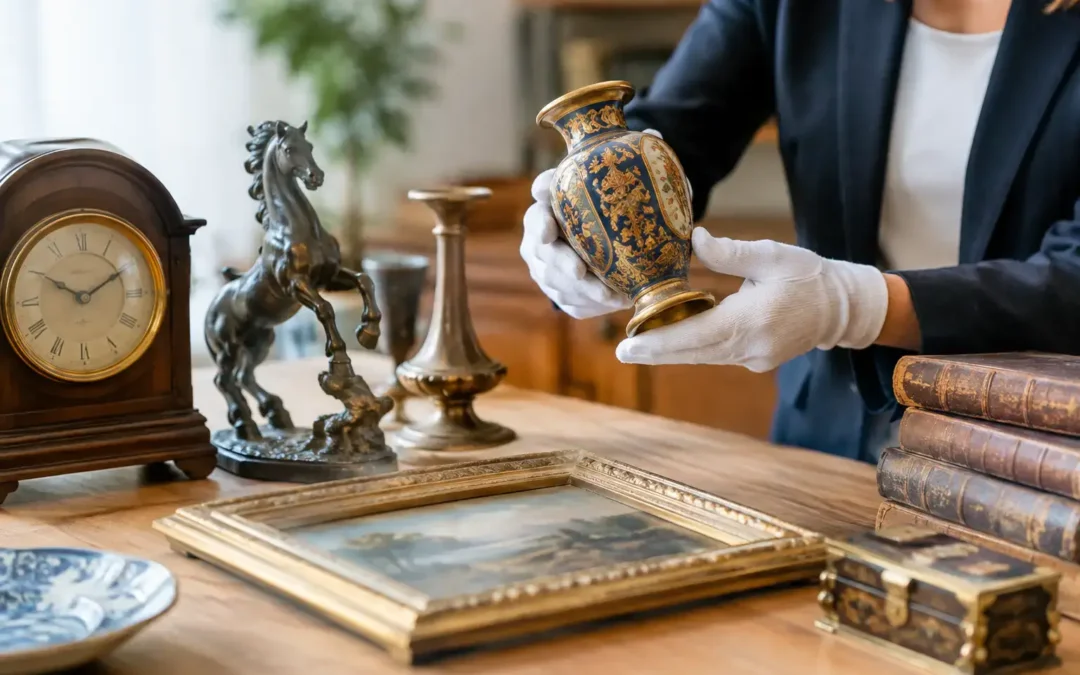
A Georgian chest in a spare room, a cabinet of inherited silver, or a painting that has been in the family for decades may be worth considerably more – or less – than its owner expects. The best ways to sell antiques begin with identifying what an object truly is, who is likely to buy it and the sales route most likely to reach that buyer. Selling quickly is sometimes necessary, but selling intelligently usually produces a better result.
Start with a proper valuation
The first question is not where to sell, but what you have. Family descriptions can be useful, particularly where they preserve provenance, yet they are not a substitute for examination. A piece described as Victorian may be later; an apparently ordinary ceramic figure may be by a sought-after maker; an unsigned painting may require closer scrutiny before it is offered for sale.
A professional valuation considers age, maker, condition, materials, rarity, provenance and current demand. These factors do not carry equal weight in every category. Original surface may matter greatly for furniture, while a jewellery valuation will focus on gemstones, metal content, craftsmanship and design. For pictures, attribution, exhibition history and condition can materially affect value.
An auction estimate is not a guaranteed price. It is a considered guide to the likely range at which competitive bidding may settle on the day. The strongest estimates are based on comparable recent results, adjusted for the individual object’s quality and the present market.
Gather the information that supports value
Before a valuer visits or you take items to an auction house, collect any receipts, certificates, restoration records, old photographs, labels and correspondence. A maker’s mark, an exhibition label or evidence that an item belonged to a known collector can help establish provenance.
Take clear photographs in natural light, including signatures, hallmarks, stamps, labels and any damage. Do not attempt to clean, polish or repair an item first. Over-cleaning can remove desirable patina, while an ill-judged repair can reduce both value and buyer confidence. A specialist can advise whether conservation is worthwhile and, crucially, whether its likely cost is justified by the potential improvement in sale price.
Selling antiques at auction
For many objects, auction is among the best ways to sell antiques because it places them before an informed audience at a defined moment. A well-catalogued lot, properly estimated and offered in the right specialist sale, can attract collectors, dealers and international bidders at the same time. Competition is the essential advantage: when two or more serious buyers want the same object, the market itself sets the price.
Auction is particularly effective for fine art, jewellery, clocks, Asian art, silver, coins, medals, ceramics, books, sculpture and unusual collectables. It can also suit single-owner collections and house contents where there is a mixture of values and categories.
The route is not identical for every consignment. A specialist sale may be preferable for a notable work of art, a period clock or a collection of Chinese ceramics, where focused cataloguing and targeted marketing reach the most relevant buyers. General sales can be appropriate for decorative antiques, furniture and collectables with broad appeal. The important point is that the sale category should fit the object, not merely the seller’s timetable.
What a good auction service provides
A reputable auctioneer will inspect the property, discuss estimates and reserves where appropriate, advise on condition and transport, photograph and catalogue the lots, promote the sale and manage payment and collection. Cataloguing is more than administration. Accurate descriptions, dimensions, maker references and condition reports allow buyers to bid with confidence, particularly online.
Online bidding has extended the reach of regional salerooms well beyond the local area. A buyer in Surrey may be competing with a collector elsewhere in the UK or overseas. This wider market is valuable, but it also makes accurate cataloguing and realistic estimates more important. Buyers have a great deal of choice and will scrutinise condition, provenance and price.
Auction does involve commission and charges, and a sale price can never be known in advance. Some lots may fail to sell if bidding does not reach an agreed reserve. Those are reasonable trade-offs where the object has collector interest and the chance of competitive bidding outweighs the certainty offered by a direct sale.
When a private sale may be the better route
Private sale can suit an exceptional object with a limited pool of known buyers, or a seller who requires discretion and does not want a public auction record. It may also be practical where a dealer has made a credible cash offer for an item that is difficult, costly or slow to market.
The weakness of private sale is that it can be hard to know whether the best buyer has been reached. A dealer must allow for restoration, holding costs, risk and a future profit margin, so an immediate offer will usually be below the price a competitive auction might achieve. That does not make it a poor choice. For a seller prioritising speed and certainty, a sensible offer from an established specialist can be the correct commercial decision.
Private online marketplaces are often tempting because they appear inexpensive. They can work for lower-value decorative pieces, but they place responsibility for photography, descriptions, enquiries, payment security, packing and disputes on the seller. They are less suitable for valuable items, objects needing specialist attribution, or anything that should be viewed before purchase.
Match the sale route to the object
There is no single answer for an entire house or estate. A common mistake is to send everything to the same buyer or to dispose of a collection as one undifferentiated group. Better results often come from sorting items by category and value.
A quality diamond ring may merit a jewellery auction; a group of first-edition books may need a book specialist; a large Victorian wardrobe may have limited demand regardless of age, especially if transport is difficult. Conversely, a small, rare piece of early porcelain can attract strong interest despite its modest size. Value is driven by desirability and scarcity, not simply by age or family sentiment.
For executors, this distinction is especially useful. A clear inventory, photographs and valuations provide an orderly basis for decisions, whether the estate is being divided, insured, sold or retained. It also helps avoid the preventable error of selling a significant item before it has been recognised.
Timing, presentation and realistic expectations
Timing can influence a sale, although it rarely transforms an object with weak demand into a valuable one. Specialist sales should be planned around an auction house’s calendar and the time needed for research, photography and marketing. Allowing several weeks is often preferable to rushing an important consignment into the next available sale.
Presentation should be careful rather than theatrical. Keep items dry, secure and together with their associated paperwork. Do not separate matching sets, discard original boxes, or remove old labels. For furniture, avoid stripping surfaces; for silver, avoid aggressive polishing; for pictures, do not attempt home cleaning. Buyers often value evidence of age and originality.
Set expectations from evidence rather than headlines about record prices. Exceptional results usually reflect exceptional provenance, condition, rarity or bidding competition. The same maker’s name on a less desirable object does not guarantee the same outcome. A candid specialist will explain both the opportunities and the limitations before asking you to consign.
Questions to ask before you consign
Ask which sale is proposed and why, whether a reserve is advisable, what the seller’s commission and any additional charges will be, and when payment is due after the sale. You should also understand collection arrangements, insurance while the items are in the auctioneer’s care, and what happens if a lot remains unsold.
For a substantial collection or estate, ask whether the auction house can provide a staged plan. High-value works may need individual research and separate specialist entries, while lower-value contents may be grouped or offered through a general sale. This avoids spending disproportionate time and expense on items whose market value does not support it.
At John Nicholson’s, specialist knowledge across categories and access to live and online bidders allow consignments to be assessed on their individual merits rather than forced into a single selling route.
The right sale begins with sound advice, not a hurried clearance. Preserve the information that accompanies an object, seek an informed valuation, and choose the market that gives the item its proper chance to be seen by the people prepared to buy it.
