
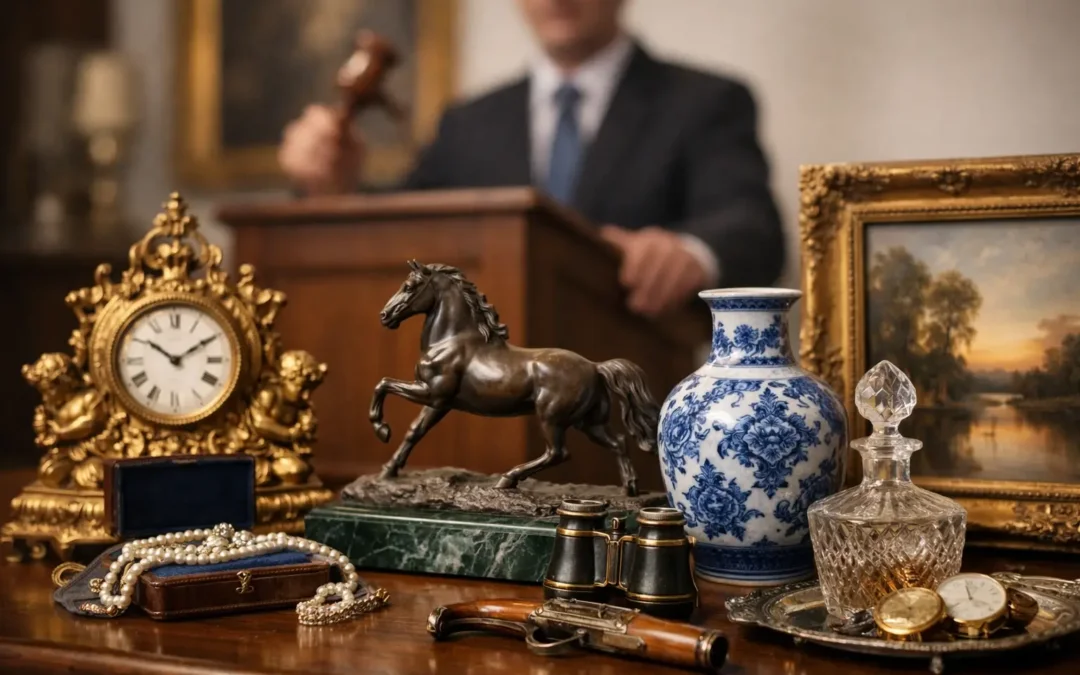
Some antiques look valuable in a drawing room but attract only modest bidding when they reach the rostrum. Others, often smaller, better documented or more specialised, can outperform expectations. If you are weighing up the best antiques to auction, the first question is not simply age – it is market appetite, condition, provenance and whether the object suits the way buyers now bid, both in the saleroom and online.
Auction is particularly effective where an item has competitive appeal, a recognisable collecting base and sufficient quality to justify open bidding. That does not mean every old object belongs in a specialist sale. Brown furniture of ordinary grade, damaged ceramics or decorative pieces with no rarity may be better suited to house clearance, private treaty or a general interiors market. The strongest auction candidates tend to be objects with craftsmanship, scarcity, maker interest or cross-border demand.
What are the best antiques to auction?
The best results usually come from categories where buyers are active, informed and prepared to compete. Fine jewellery remains one of the most consistent examples. Gold weight gives a base level of value, but design, gemstones, signatures and period can move a piece well beyond intrinsic worth. Georgian, Victorian and Art Deco jewels, good diamond rings, natural pearls and signed pieces by established houses all tend to perform well when catalogued accurately and presented with proper condition reporting.
Silver is another dependable category, though selectivity matters. Good Georgian table silver, well-modelled novelty pieces, card cases, vinaigrettes and provincial makers often attract stronger bidding than plain later flatware sold by weight. Hallmarks, maker’s marks and originality are central. A well-preserved set with crisp engraving and useful provenance will generally fare better than polished, repaired or incomplete examples.
Clocks continue to appeal where quality and maker are present. Bracket clocks, carriage clocks by respected makers, skeleton clocks and fine longcase clocks can all perform strongly, especially when movements are original and cases retain their integrity. Buyers are understandably cautious about extensive restoration, replacement parts and undisclosed mechanical issues, so realism in estimate and careful cataloguing are essential.
Ceramics can be excellent auction property, but this is a category where expertise makes a marked difference. Early English porcelain, good Worcester, rare provincial pottery, named factory pieces and Chinese export porcelain with desirable decoration can attract specialist and trade attention alike. By contrast, decorative cabinet china without rarity may have a thinner market than sellers expect. Condition is often decisive. A hairline crack or restored rim can alter value materially.
Furniture is more uneven, yet certain areas remain resilient. Well-proportioned Georgian pieces, country furniture with honest surface, campaign furniture, Arts and Crafts designs and works by notable makers continue to command interest. Large, dark Victorian furniture of ordinary quality can be far harder to place. Buyers are more selective than they were a generation ago, partly because transport, room sizes and modern interiors affect demand. In furniture, good scale and strong originality count for a great deal.
Best antiques to auction by current demand
Pictures and works of art deserve separate consideration because they often benefit most from specialist marketing. Oil paintings, watercolours, sculpture and prints by listed artists can attract broad bidding, especially where attribution is secure and the subject has commercial appeal. Portraits, marine scenes, sporting art and regional landscapes all have established audiences. Here provenance, exhibition history and labels on the reverse can matter almost as much as the image itself.
Asian art is a category where auction can produce notably strong outcomes. Chinese ceramics, jade, bronzes, works of art and export wares often attract international interest, particularly when period, reign marks and provenance are properly assessed. Japanese netsuke, lacquer and metalwork can also perform well. This is not a field for guesswork. Small details of reign, material and condition can shift value sharply, which is why specialist appraisal before sale is so important.
Islamic art, manuscripts, textiles and metalwork also warrant attention where quality is evident. Buyers in these categories respond to rarity, age, craftsmanship and authenticity. Pieces that have been in private hands for many years can draw serious interest if catalogued with discipline. General descriptions tend to suppress bidding; informed cataloguing tends to stimulate it.
Books, maps and manuscripts can be underestimated by non-specialists. Early printing, fine bindings, natural history, travel, local topography and signed first editions all have collecting markets. Value often depends on completeness, edition and condition rather than simple age. A nineteenth-century commonplace volume may be of little commercial interest, while a single scarce pamphlet can be highly desirable.
Coins and medals remain among the more straightforward categories for auction because there is an established buying base and transparent comparables. Gold coins, proof sets, rare dates, military medals with named entitlement and groups with paperwork all tend to attract competition. Cleaning, mounting and mishandling can affect value, but well-preserved collections usually translate well to auction.
Vintage collectables have broadened the field considerably. Toys, watches, fountain pens, advertising signs, designer handbags, militaria and twentieth-century design can all sell very effectively when they meet current collecting taste. The lesson here is that auction is not only for formal antiques. In many cases, a twentieth-century object with rarity and provenance will outperform a far older but less fashionable piece.
Why some antiques do better at auction than others
Three factors usually separate strong auction property from weak. The first is competitive demand. If several buyers are likely to want the same lot, auction is the right mechanism because bidding can establish full market level in real time. If demand is narrow or uncertain, the result may be more modest.
The second is catalogue strength. A lot with an identified maker, clear dating, measurements, condition note and sensible estimate stands a better chance of attracting serious bidders than one described vaguely. Good photography also matters, particularly now that so much bidding takes place online.
The third is practicality. Items that are easy to ship and easy to display often have a broader market. Jewellery, silver, small works of art and collectables benefit here. Very large furniture and fragile decorative objects may still sell well, but the pool of buyers can be smaller once transport and storage are considered.
When auction may not be the best route
Not every inheritance, collection or attic discovery belongs in a specialist antique sale. If an item has low individual value, high restoration costs or little current demand, auction fees and logistics may outweigh the benefit of open competition. Sets with missing parts, heavily damaged furniture or commonplace decorative wares can fall into this category.
There is also the question of timing. Some categories benefit from being placed into the right themed sale rather than being entered at the first available date. A good watch in a specialist jewellery auction may reach a stronger audience than the same watch in a mixed general sale. Matching the object to the correct sale calendar is part of the commercial judgement.
How to judge whether your antique is worth consigning
Start with four practical considerations: quality, condition, provenance and estimate. Quality means more than appearance. It includes maker, material, design and rarity. Condition should be assessed honestly, not hopefully. Provenance might include family history, receipts, exhibition labels, old inventories or photographs showing the object in situ. Estimate should be realistic enough to encourage bidding while reflecting genuine market level.
This is where experienced valuation advice matters. A specialist can often identify details a general observer would miss – a provincial silver mark, a sought-after porcelain factory, a later marriage in furniture, a signature hidden beneath old backing boards. Those distinctions affect not only value but also the proper route to market. An established auction house such as John Nicholson’s will generally advise not just on what an object is, but on whether it should be offered in a specialist or general sale, and at what estimate.
Sellers should also resist the idea that cleaning always helps. Over-polishing silver, washing labels from ceramics, revarnishing furniture or interfering with pictures can reduce appeal. Original surface, honest wear and untouched condition are often preferable to well-meant improvement.
The best antiques to auction are rarely defined by age alone. They are the pieces that combine quality with current demand, are catalogued with authority and are placed before the right audience. If you have jewellery, silver, clocks, Asian art, paintings, coins or well-documented collectables, auction is often the clearest route to establishing true market value. The sensible next step is not to guess, but to have the object assessed properly and sold in the context it deserves.