
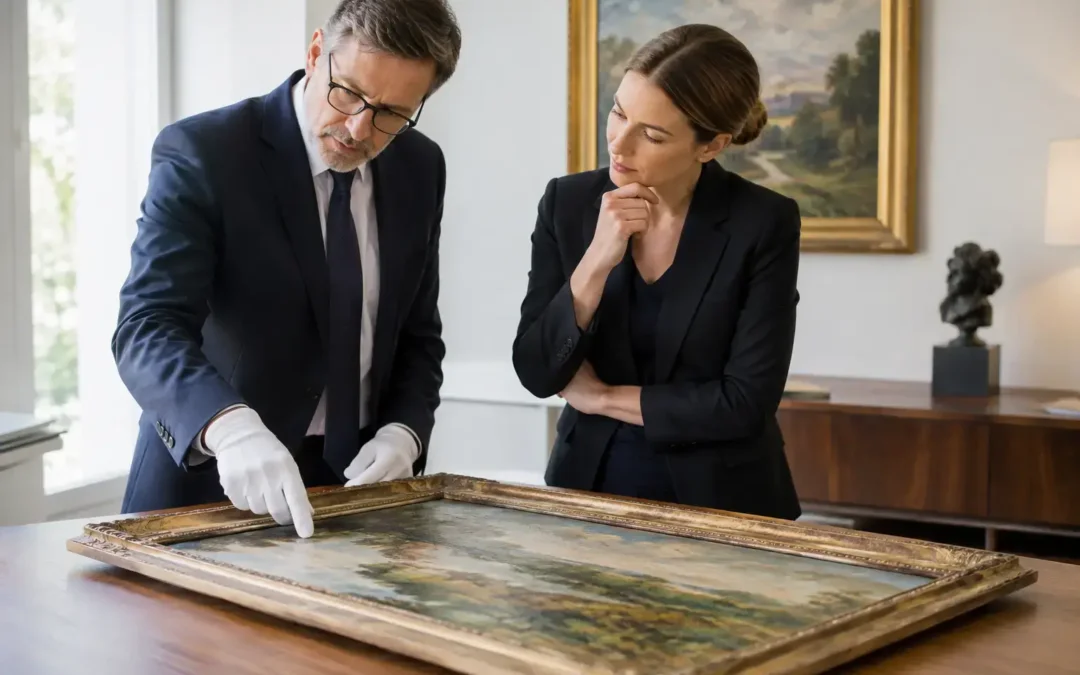
A painting found in a family home may be an ornament, a significant estate asset, or a work specifically promised to someone in the will. That distinction matters. So, can executors sell inherited art? In many cases, yes. Executors commonly have authority to sell estate assets in order to settle debts, meet inheritance tax liabilities, pay administration costs or divide the estate fairly. But a sale should only proceed once the executor has established what is owned, what the will requires and what the work may properly be worth.
For art, getting the process right is particularly valuable. A rushed private sale can leave money on the table; an overlooked inscription, exhibition label or artist attribution can materially change the result. Executors are not expected to be art-market specialists, but they are expected to act carefully and in the best interests of the estate.
Can executors sell inherited art before probate?
The answer depends on the circumstances. An executor derives authority from the will, but a grant of probate is often needed before they can deal with certain estate assets and complete a formal sale with confidence. Where a work is held at home and the estate is straightforward, the practical question is usually not physical possession but whether selling it at that stage is appropriate.
Executors should first read the will closely. It may contain a specific gift of a named picture, sculpture or collection to an individual. If so, that item generally should not be sold merely because another beneficiary would prefer cash. Equally, a will may direct that personal chattels are to be divided in a particular way, or give executors an express power to sell.
Where there is no specific gift, art ordinarily forms part of the residuary estate. The executor may then sell it if this is a sensible route to realising the estate, subject to their duties and any agreement required between personal representatives. If there is no will, the administrators of the estate have comparable responsibilities, though the rules of intestacy determine who benefits.
A sale before probate can create avoidable difficulty where ownership is uncertain, a beneficiary disputes the proposed disposal, or a valuable work needs a formal probate valuation. Sensible executors take advice from the solicitor handling the estate and keep a clear written record of their decision-making.
The executor’s duty is to the estate, not to a quick sale
Executors must safeguard estate property and obtain a proper market outcome. This does not mean they must achieve the highest price imaginable, nor does it require them to wait indefinitely for a perfect buyer. It does mean they should take reasonable steps to identify the work accurately, assess the available selling routes and avoid disposing of it at an evident undervalue.
A watercolour attributed by the family to a well-known artist may require closer examination before it is marketed. Conversely, an unsigned decorative picture may not justify costly research. Proportion matters. The level of investigation should reflect the likely value, the quality of the available evidence and the cost of obtaining further expertise.
It is also prudent to avoid conflicts of interest. An executor who wishes to buy a work from the estate should not simply set a figure and take it home. Full disclosure, an independent valuation and the informed written consent of those entitled to the estate are sensible protections. The same care applies where an executor wants to sell to a relative, dealer or personal acquaintance.
Start with a probate valuation, then decide how to sell
A probate valuation is not merely an inventory with broad figures. It provides a reasoned view of the open-market value of estate assets at the date of death, helping executors report accurately for inheritance tax purposes where required. For art and antiques, it should identify objects sufficiently clearly and take account of the relevant market.
That valuation is different from an auction estimate. Probate values reflect date-of-death market value; auction estimates are a guide to the range a lot may achieve in a particular sale, at a particular time, before buyer’s premium. Markets can move, and further research may alter an attribution after the initial valuation.
Before accepting an offer or entering a lot for sale, assemble what is available: purchase invoices, old valuations, certificates, correspondence, labels on the reverse, photographs, exhibition references and family knowledge of provenance. Do not clean, restore, reframe or remove old labels without professional advice. Condition is central to value, but ill-judged intervention can damage both the object and its saleability.
Where the work has remained in an occupied house, confirm that the household insurance remains adequate. Once it is moved for valuation, storage or sale, establish who is responsible for cover and when. This is a small administrative point with serious consequences for a valuable picture, bronze or piece of jewellery.
Choosing the right route to market
An auction is often well suited to inherited art where the objective is a transparent, time-defined sale exposed to competing buyers. A specialist auctioneer can assess attribution, condition, provenance and comparable results, then place the work in the sale most likely to reach the appropriate audience. Fine art with international appeal may benefit from online bidding alongside the saleroom, while a regional subject or decorative work may perform strongly with local and national interest.
Private treaty sale can be appropriate for certain higher-value works, particularly where a discreet approach to a small number of known buyers is likely to serve the estate better. It may take longer and can offer less visible price discovery. Sale to a dealer provides speed and certainty, but normally at a lower level than a competitive auction result because the dealer must allow for risk, stockholding and resale margin.
The right method depends on the object. A group of modest prints may be best sold together in a general sale; a strong work by a recognised artist may deserve individual cataloguing and specialist promotion. Executors should ask how the lot will be described, photographed, marketed and offered to online bidders, as well as what commission, insurance, transport and any other charges will apply.
At John Nicholson’s, estate consignments are assessed with these practical distinctions in mind, from single pictures to mixed collections of art, furniture and decorative objects. The aim is not simply to clear a property, but to place each item in the market where it has the strongest prospect of finding informed buyers.
Records that protect the executor
Good paperwork is an executor’s ally. Keep the valuation, sale recommendations, correspondence with beneficiaries, condition reports, auction agreement, catalogue description, reserve decision and final settlement statement with the estate file. If an item is withdrawn, bought in or sold after the auction, record the reason and the authority for the next step.
The following checks are especially worthwhile before an inherited work is consigned:
- Confirm whether the will makes a specific gift of the item or collection.
- Establish who the acting executors are and whether they must act jointly.
- Obtain an appropriate valuation, particularly where inheritance tax reporting may be relevant.
- Check provenance, ownership concerns, condition and any restoration history.
- Agree the sale method, reserve and charges in writing.
- Tell beneficiaries enough to prevent avoidable misunderstanding, especially where the object has sentimental significance.
Some works need additional consideration. Art imported from abroad, objects containing ivory, and works subject to cultural-property restrictions can involve documentation or legal controls. Artist’s Resale Right may also apply to qualifying works sold through an art-market professional where the artist is living or died within the relevant copyright period. An experienced auctioneer will identify the practical issues, but executors should disclose everything they know.
When beneficiaries disagree about inherited art
Disagreement is common where one person values a picture for family reasons and another sees it as an asset that should be sold. The executor should not decide the matter according to sentiment alone, but neither should they dismiss sentiment without thought. If a beneficiary wishes to retain the work, a professionally supported valuation can provide a fair basis for them to take it at an agreed value, with the estate receiving the equivalent credit.
Where consensus cannot be reached, the executor should seek legal advice before proceeding. Their obligation is to administer the estate correctly, not to mediate indefinitely between competing wishes. Clear evidence of value and a documented rationale will usually put the executor in a far stronger position.
Inherited art deserves the same disciplined treatment as any other significant estate asset: identify it, value it properly, respect the will and choose a sale route that can stand up to scrutiny. A careful decision at the outset gives the estate the best chance of a sound commercial result and gives the executor confidence that they have acted fairly.
