
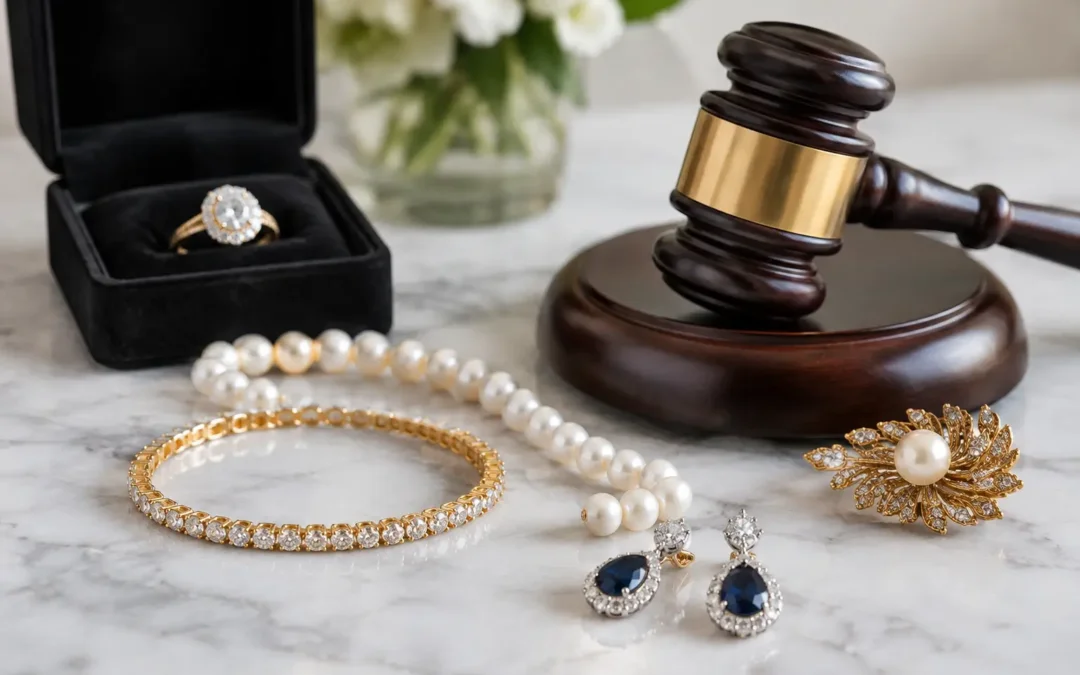
A diamond ring can appear modest in a jewellery box yet attract intense competition once its period, maker, provenance and stone quality are properly identified. Equally, a piece that carries great family sentiment may have a limited secondary-market audience. A considered guide to estate jewellery sales begins by separating these two values, then putting each item into the sale route most likely to achieve its proper market price.
Estate jewellery may arise from an inheritance, a probate estate, a private collection, a house clearance or a decision to downsize. Whatever the circumstance, the task is not simply to find a buyer. It is to establish what is being offered, determine where demand lies, and present it credibly to buyers who understand jewellery.
Guide to Estate Jewellery Sales: Start with Identification
Do not rely on a handwritten note, an old insurance schedule or a family recollection as the final word on value. These can be useful supporting material, but jewellery values change with fashion, precious metal prices, gemstone supply and collector demand. An insurance valuation is designed to calculate replacement cost, which is commonly higher than an achievable auction price.
A specialist inspection should establish the principal facts: metal standard and hallmarks, approximate date, maker where known, gem types, measurements, condition, any alterations and the presence of original boxes or papers. For important diamonds and coloured stones, laboratory reports can be influential. Their relevance depends on the stone and the report itself. A well-regarded report may give buyers confidence in a significant sapphire, ruby, emerald or diamond; it is less likely to add value to a modest commercial stone.
Keep related material together. Receipts, photographs showing a piece being worn, previous valuations, certificates and documentation of a named owner can all assist cataloguing. Provenance is most valuable when it is clear, relevant and capable of being supported. A label alone is not proof, but it may provide a useful line of enquiry.
Take care before cleaning or altering anything
Owners are often tempted to polish silver, repair a clasp or have stones reset before seeking advice. This can be counterproductive. Over-polishing may remove desirable surface character, and replacing an original fitting can affect both condition and period integrity. Jewellery should be handled carefully, stored separately to avoid scratching, and assessed before any significant work is commissioned.
A simple surface clean may be appropriate in some cases, but ultrasonic cleaning is not suitable for every gem or setting. Pearls, opals, emeralds and older jewellery with delicate mounts require particular caution.
Establish Which Valuation You Need
The phrase valuation is used broadly, but the purpose matters. For executors, a formal probate valuation establishes a value at the date of death for estate administration and tax purposes. It is not necessarily the same as the later auction estimate. For insurance, replacement value is the relevant measure. For sale, the question is what informed buyers are likely to pay in the current market.
An auction estimate is generally presented as a range. It reflects recent comparable results, quality, condition, desirability and the anticipated depth of bidding. It is not a guarantee, but it is an important tool for positioning a lot. Estimates set unrealistically high can discourage early interest. Estimates that are properly judged can encourage competition, particularly where a piece has broad appeal.
For a substantial estate, it is sensible to ask how the valuation process will distinguish jewellery suitable for specialist sale from pieces more appropriately grouped or sold in a general auction. A signed Art Deco jewel, a fine antique diamond brooch and an exceptional jadeite pendant should not be treated in the same manner as a quantity of modern costume jewellery.
Choose the Right Auction Strategy
The strongest sales result is rarely produced by offering everything in one undifferentiated group. Sale selection, lotting and timing are commercial decisions.
Fine jewellery with recognised makers, notable gemstones, strong design or significant intrinsic value may merit individual catalogue entries in a dedicated jewellery auction. These pieces benefit from detailed descriptions, measured weights where possible, condition reports and focused promotion to established buyers.
Other pieces may perform best as small groups. Matched pairs of earrings, a collection of gold chains, or a quantity of silver and gem-set rings can appeal to dealers and private buyers when offered in a sensible lot. Grouping can reduce catalogue and handling costs, although it can also limit the attention given to an individual item. The right approach depends on quality, value and the likelihood of separate bidding.
Timing also matters. A specialist auction with an established jewellery audience is generally preferable to a sale chosen merely for speed. That said, an estate administration may have a deadline, and a good auctioneer should explain the practical options rather than promise an unrealistic timetable.
At John Nicholson’s, jewellery is assessed in the context of the wider estate and the appropriate specialist sale, allowing individual pieces and collections to be directed according to their market potential.
Reserve prices and realistic expectations
A reserve is the confidential minimum price at which a lot may be sold, agreed with the auctioneer in advance. It protects the seller from an unacceptable result, but it must be realistic. If set above the level supported by comparable auction evidence, it can prevent a sale and leave the owner with further decisions on re-offering, revising the reserve or collecting the item.
It is worth discussing the reserve alongside the estimate, not after the catalogue is finalised. Sellers should also understand the agreed commission, any photography or insurance charges, and arrangements for unsold lots. Clear terms remove uncertainty at the point when the hammer falls.
Catalogue Presentation Drives Buyer Confidence
Buyers bid more readily when they can assess a lot with confidence. A proper catalogue entry should not overstate a piece, but it should record the details that matter: the metal, hallmarks, maker’s mark, period, gemstone information, dimensions, gross weight where appropriate, condition and provenance.
Photography is equally significant. Clear images of the front, reverse, hallmarks and distinctive details allow remote bidders to make an informed decision. This is particularly important because many jewellery buyers now participate online as well as in the saleroom.
Condition should be described candidly. A chipped stone, worn setting, replacement clasp or evidence of repair does not automatically prevent a sale. Some period pieces remain highly desirable despite wear. The issue is whether buyers can account for that condition before bidding. Surprises after a sale undermine confidence; accurate reporting supports it.
Reach the Buyers Who Matter
An auction house offers more than a room on sale day. Its role includes producing a credible catalogue, advising on estimates and reserves, notifying relevant buyers, enabling condition enquiries and providing routes for absentee, telephone and online bidding.
For estate jewellery, broad visibility can be valuable, but a large audience alone is not enough. The object must reach buyers with reason to pursue it: collectors of period jewellery, dealers, jewellers, investors in exceptional stones and private purchasers looking for distinctive pieces. Multi-platform online bidding can widen participation beyond the immediate area, while a live auction retains the competitive tension that often produces stronger results.
Sellers should be wary of offers made before a full assessment, particularly where there is pressure to sell quickly or where the offer appears to cover an entire box without itemised consideration. A direct sale can sometimes be appropriate, especially for straightforward gold or silver items, but it does not test the market in the same way as competitive bidding. The decision should be made with a clear understanding of the likely alternatives.
Practical Steps for Executors and Owners
Before jewellery leaves the property, make a simple record of what is present. Photograph groups as found, note any items believed to have been specifically gifted, and keep keys, boxes and paperwork together. Executors should confirm that they have authority to instruct a sale and should retain the valuation and sale records for estate administration.
Where several family members are involved, agreement on the process early on can prevent difficulty later. Some families choose to reserve particular sentimental items before sale, while others prefer to sell everything and divide the proceeds. Neither approach is inherently right. The essential point is that the items selected for auction are clearly identified and the instructions are properly recorded.
A jewellery sale is at its best when expertise, presentation and competition work together. Before parting with a single ring or an entire family collection, allow time for a specialist assessment: the overlooked detail may be the one that changes the result.