
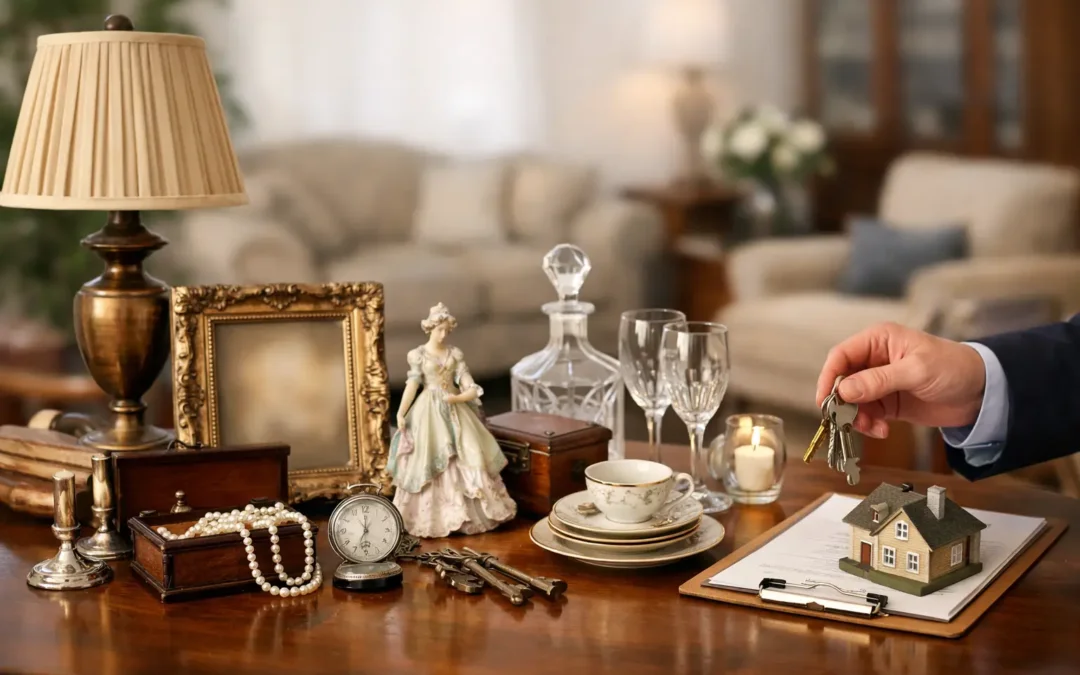
An estate can contain everything from family silver and paintings to everyday furniture, books and boxes of mixed effects, and the difficulty is rarely knowing where to begin. A sensible guide to selling estate contents starts with one principle – do not clear the house too quickly. The objects with the strongest market appeal are not always the obvious ones, and early mistakes can be costly.
For executors, families and owners managing a house move, probate matter or downsizing, the task is part practical, part financial. Some contents should be sold at auction, some may suit private treaty sale, some can be grouped into general household lots, and some will have little commercial value at all. The aim is not simply to empty a property. It is to match the right objects to the right selling method, with proper valuations and realistic expectations.
Why selling estate contents needs a plan
A house contents sale is often treated as a clearance exercise. That is understandable, particularly where there are deadlines for probate, exchange of contracts or vacant possession. Even so, speed without assessment tends to depress returns. A single overlooked watch, Chinese vase, military medal group or folder of prints can be worth more than an entire room of modern furnishings.
A proper plan helps you separate three distinct questions. First, what has genuine auction value? Second, what is saleable but lower in value and best handled in grouped lots or general sales? Third, what is purely for donation, recycling or disposal? Once those categories are clear, decisions become far easier.
Condition, provenance, maker, age and current demand all matter, but so does context. A piece of furniture that struggles in one setting may sell well if catalogued correctly within a specialist sale. Equally, inherited items with strong sentimental value may have limited commercial demand. Good advice should balance both realities.
Guide to selling estate contents: start with sorting, not selling
Before any sale route is chosen, the contents need to be reviewed carefully. This does not mean deep research room by room, nor does it mean piling everything into broad categories and hoping for the best. The first pass should identify obvious areas of interest: pictures, jewellery, watches, silver, coins, medals, Asian works of art, ceramics, sculpture, clocks, antique furniture, books and collectables.
It is also worth setting aside paperwork. Old invoices, exhibition labels, certificates, receipts, service papers, maker’s boxes and family correspondence can materially affect value. Provenance is not decorative background information. In some categories it can transform market confidence and bidding strength.
Photograph items before anything is moved. This is useful for valuation, for executor records and for settling later questions within a family. It also helps if items need to be collected in stages rather than removed in one visit.
Where there is a substantial property, resist the temptation to judge by room alone. Valuable objects are often found in studies, cupboards, lofts and drawers rather than principal reception rooms. Jewellery mixed with costume pieces, coins in desk compartments and signed ceramics in kitchen dressers are all common enough.
Valuation comes before disposal
One of the most expensive errors in estate dispersal is treating all contents as house clearance material. A clearance contractor and an auction valuer perform different functions. The former removes contents efficiently. The latter identifies what the market may compete for.
This is where professional valuation earns its keep. An experienced auction house can indicate which pieces belong in specialist sales and which are better suited to general auctions. That distinction matters because specialist cataloguing, targeted marketing and an established bidder base often improve results for stronger material.
Valuation is also about setting expectations. Not every antique is valuable, and not every modern design object is ordinary. Markets move. Brown furniture remains selective, while good jewellery, fine paintings, Asian art, rare collectables and objects with strong provenance can attract determined bidding. The practical question is not whether an object is old. It is whether there is active demand for it now.
Choosing the right sale route
There is no single answer when considering how to sell estate contents. The best route depends on quality, volume, timing and the balance between convenience and return.
Auction is often the strongest option for items that benefit from competitive bidding. Fine art, jewellery, silver, clocks, ceramics, Chinese and Asian works of art, medals, coins and good collectables frequently perform best where proper estimates, cataloguing and exposure to serious buyers are in place. A respected saleroom with live and online bidding extends that audience beyond the local area, which is particularly important for specialist categories.
General auction sales can work well for middle-market furnishings, decorative pieces and mixed estate property that remains saleable but is not individually exceptional. Grouping these objects sensibly can reduce handling costs and still produce worthwhile returns.
Private sale may suit certain higher-value items where discretion or a very specific buyer pool is relevant, but for many estates the transparency of auction is attractive. It provides a visible process, open competition and a clear post-sale accounting.
For purely practical household contents with negligible market value, clearance may be the sensible route. The key is to reach that conclusion after valuation, not before.
What affects value most
People often ask whether age is the deciding factor. It rarely is. Condition has a direct impact, but rarity, attribution and desirability are often more important. A clean, untouched object with honest wear can be preferable to an over-restored one. Original surfaces, complete sets, maker’s marks and documentary provenance all help.
Presentation matters as well. Jewellery should be identified correctly by metal and stone. Paintings need proper attribution, medium and dimensions recorded. Ceramics require accurate factory or artist identification. In books and medals, completeness and association can be decisive.
There are trade-offs. Minor damage does not always prevent sale, especially where rarity is strong, but poor repairs can deter buyers. Likewise, cleaning can help in some categories and harm in others. Silver may tolerate careful polishing. Coins, medals, paintings and furniture usually call for more restraint. If unsure, leave the object as found until it has been assessed.
Practical issues for executors and families
Executors have additional duties beyond achieving a sale. They need a process that is defensible, documented and proportionate. That usually means obtaining professional valuations, keeping records of what was consigned, noting reserves or agreed estimates where relevant, and ensuring beneficiaries understand the chosen route.
This is especially important where family members have differing views on value. Auction can be helpful precisely because it tests the market rather than relying on informal opinion. It can also avoid the awkwardness of one relative taking items at an assumed price that later proves unrealistic.
Timescale should be discussed early. If probate has not yet been granted, valuation may still proceed, but sale arrangements must fit the legal position of the estate. If a property sale is pending, collection and consignment schedules need to be aligned with access dates. A good auction house will understand these pressures and help sequence the work sensibly.
Preparing contents for auction
Once selected for sale, contents should be left largely as they are unless specific advice is given. Do not re-upholster furniture, reframe pictures, wash textiles aggressively or separate mixed groups that may have context together. Auctioneers would usually prefer to see estate property in an unforced state.
Gather any supporting information you have, even if incomplete. Names on the back of a picture, family stories about where a piece was bought, or details of military service linked to medals can all provide useful leads. Not every story adds value, but some do.
Transport, collection and insurance are practical points worth confirming in advance. For larger consignments, a site visit can be the most efficient way to decide what should go to specialist sale, what belongs in general auction, and what should not be transported at all.
In the South East, where country houses, period properties and long-held family collections often produce varied estates, breadth of category knowledge matters. A single probate consignment may include fine art, garden sculpture, Persian rugs, watches, glass, bronzes and ordinary domestic effects under one roof. That is best handled by an auctioneer used to mixed estates rather than a narrow single-category model.
The emotional side of selling estate contents
Even commercially minded estates involve judgement beyond price alone. Families may wish to retain a few representative items and sell the balance. That is often sensible. It reduces pressure and prevents hurried decisions made at a difficult moment.
It also helps to accept that market value and family importance are different things. A modest object can be the one worth keeping. A valuable one may have little personal meaning and be better realised through sale. The point of a structured process is not to strip sentiment from the exercise, but to stop sentiment and haste from obscuring sound decisions.
John Nicholson’s has long handled estate property across collecting categories, and the pattern is consistent: estates sold carefully tend to fare better than estates sold quickly. The strongest results usually come from accurate identification, realistic estimates, disciplined lotting and access to genuine bidders.
If you are facing the task now, start with assessment, not removal. A measured approach almost always leaves you with better choices, clearer records and a sale process that stands up both financially and practically.