
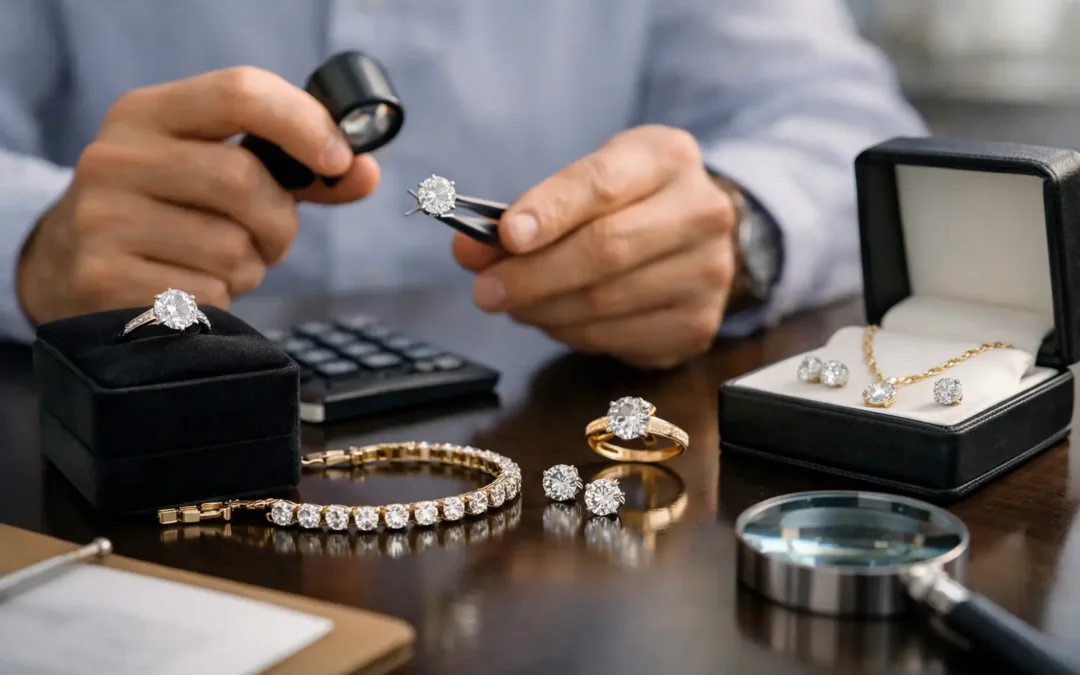
A diamond ring described in a drawer as simply “old family jewellery” can produce anything from scrap value to strong competition in the saleroom. That is why jewellery valuation for sale is not a paper exercise or a matter of sentiment. It is a commercial assessment of what a piece is likely to achieve in the current market, based on evidence, craftsmanship, condition and buyer demand.
For private owners, executors and collectors, the distinction matters. A valuation prepared for probate or insurance serves one purpose. A valuation prepared for sale serves another entirely. If the intention is to consign jewellery to auction or consider other sale routes, the only useful question is not what it once cost, nor what it might cost to replace, but what informed bidders are likely to pay now.
What jewellery valuation for sale actually means
A sale valuation is an estimate of likely selling range in the open market. In auction practice, that usually means a pre-sale estimate shaped by recent comparable results, the inherent quality of the piece, and the audience most likely to bid. It is commercial, not theoretical.
This differs from insurance valuation, which is often higher because it reflects replacement cost in the retail market. Probate valuation has its own basis as well, tied to a date and an assessment of market value for estate purposes. Confusion arises when owners present an insurance document and assume it represents likely sale proceeds. Very often it does not.
A proper valuation for sale therefore starts with realism. Jewellery is bought and sold within distinct markets. A branded diamond solitaire in excellent condition may attract strong interest. A mass-produced chain with modest intrinsic value may be judged chiefly on bullion content. A period brooch by a known maker may outperform its material value because collectors want the object, not merely the gold.
How specialists assess jewellery for sale
The process is part gemmological observation, part connoisseurship and part market judgement. No credible valuer works from one factor alone.
Materials and intrinsic value
Gold, platinum and silver provide a baseline, but only a baseline. Weight, purity and hallmarks all matter. In some pieces, especially broken, heavily worn or unfashionable items, intrinsic metal value can exert a strong influence on the estimate. That said, jewellery with design merit should not be reduced too quickly to scrap logic.
Gemstones are considered by type, size, quality and whether they appear natural, treated or synthetic. Diamonds are judged by the familiar criteria of colour, clarity, cut and carat weight, but those points are not the whole story. Mounting, make and marketability still affect price. Coloured stones require even more care. Origin can matter in the right case, but so can tone, saturation, transparency and whether the stone has been heated or otherwise enhanced.
Age, maker and design
A Victorian mourning ring, an Art Deco sapphire and diamond plaque ring, or a mid-century piece by a recognised house each sits in a different market. Period and style influence desirability, and desirability influences bidding. Signed jewellery may carry a premium, provided the signature is genuine and the piece is characteristic of the maker.
Unsold stock from a modern retailer, by contrast, may have little secondary market premium even if originally expensive. Auction buyers are not paying for a showroom margin. They are buying the object as it stands in the present market.
Condition and repair history
Condition is not a footnote. Replaced stones, thinning shanks, chipped gems, broken clasps, poor solder repairs and heavy wear can all suppress value. Some age-related wear is expected in antique jewellery, and buyers often accept it if the piece remains sound and attractive. Extensive damage is different.
Equally, restoration can help or hinder. A careful period-appropriate repair may preserve saleability. An over-polished ring, a crude rebuild or a reset stone that alters the original character may weaken appeal. It depends on the object and the buyer base.
Provenance and documentation
Boxes, receipts, certificates and family history do not guarantee a higher result, but they can help. Laboratory certification for important stones may increase confidence. A documented maker attribution or known provenance may broaden interest, especially where collectors are involved. Unsupported family tradition, however sincerely held, is not evidence.
Why auction value and retail value are different
This is the point many sellers find hardest to accept. Retail pricing includes overheads, stock risk, presentation and warranty. Auction estimates are framed for a competitive sale environment where the reserve must be sensible enough to encourage bidding.
That does not mean auction is always lower in every case. Rare, fashionable or highly collectable jewellery can exceed expectation when two or more determined bidders compete. But the estimate must still be grounded in the actual behaviour of the market. Overvaluation is not a kindness to the seller. It can deter bidding, leave lots unsold and ultimately weaken confidence.
A disciplined jewellery valuation for sale weighs ambition against evidence. The strongest results often come from accurate cataloguing, realistic estimating and access to the right buying audience, rather than from inflated expectations at the outset.
When auction is the right route
Auction is particularly suitable where a piece has collector interest, period character, notable stones, strong design or uncertainty that can best be resolved by open competition. Estate jewellery, inherited pieces and mixed private-owner consignments often perform well in specialist sales because bidders can compare, compete and judge value in real time.
It can also be an efficient route for executors or families handling multiple assets. Jewellery rarely exists in isolation. It may sit alongside silver, watches, coins, pictures or ceramics within a wider estate. An auction house with broad specialist departments can assess the group coherently and advise on where each item is best placed.
Private treaty sale may suit some high-value pieces, particularly where discretion or a very targeted buyer approach is required. Scrap or bullion sale may be rational for damaged, generic or incomplete items with no design premium. The right route depends on the character of the jewellery, not on a fixed rule.
Preparing jewellery for valuation
Sellers do not need to polish jewellery aggressively or attempt home repairs before an appointment. In fact, that can do harm. What is useful is straightforward documentation and clear presentation.
Bring any certificates, old receipts, maker paperwork or previous valuations, while understanding that earlier documents may not reflect current sale value. If there is a known repair history, mention it. If stones are believed to have been replaced, say so. Good valuation work depends on accurate information as much as careful inspection.
It is also sensible to gather groups logically. Single earrings, broken chains and loose stones should not be hidden in with complete pieces. A valuer needs to distinguish between items suited to specialist cataloguing and those more appropriately treated as scrap or mixed lots.
What to expect from the valuation appointment
A specialist will examine hallmarks, test materials where necessary, assess stones, note condition and consider market comparables. In some cases, especially with significant gemstones or signed pieces, further research may be required before a final estimate is settled. That is normal. Serious valuation is rarely instant guesswork.
Owners should expect clear advice on estimate range, reserve strategy where relevant, selling fees and the most suitable sale category. A professional conversation will also address uncertainty. Not every ruby is fine Burmese material. Not every old diamond ring is rare. Good advice is precise, not flattering.
Common mistakes sellers make
The first is relying on insurance paperwork as a sale guide. The second is assuming age alone creates value. Plenty of old jewellery is modest. Plenty of twentieth-century jewellery is highly desirable. Date matters, but quality matters more.
The third mistake is undervaluing the effect of presentation and cataloguing. A strong lot description, proper photography and accurate attribution can materially affect bidder interest. This is one reason specialist auction handling matters. Serious buyers read details closely.
The fourth is setting expectations by sentimental attachment. Family history gives an object meaning, but the market does not price emotion. It prices rarity, quality, condition and demand.
A market-led view of value
The jewellery market is not static. Gold prices move. Taste changes. Certain periods come in and out of favour. Branded jewellery can strengthen sharply, while generic modern pieces may soften. Coloured stone demand can shift with fashion and supply. Even the same ring may perform differently depending on how, where and when it is offered.
That is why current, sale-focused advice matters. A credible valuation is not just about identifying what a piece is. It is about judging how it will be received by today’s buyers. At John Nicholson’s, that judgement is shaped by regular auction practice, not abstract theory.
If you are considering selling jewellery, the most useful starting point is an informed, commercially grounded assessment. Once you know what the piece is likely to achieve, decisions become much easier – whether that means consigning to auction, grouping items differently, or waiting for a stronger moment in the market.