
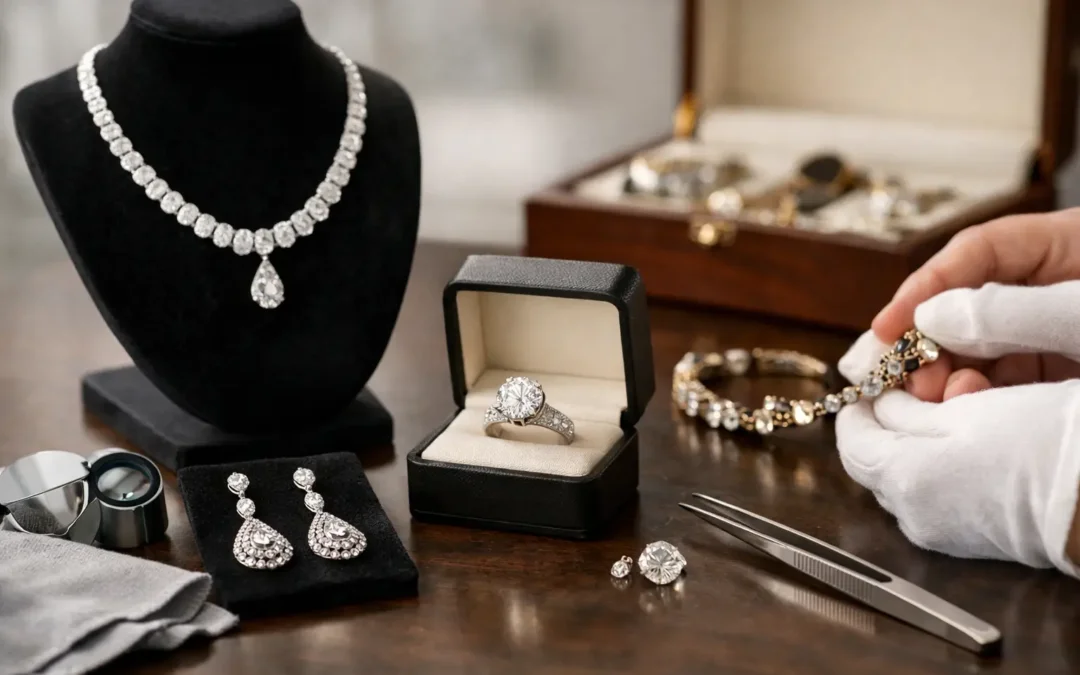
A diamond ring found in a drawer, a gold watch from an estate, or a case of inherited jewellery can look deceptively straightforward to sell. Yet the decisions made before valuation can affect how confidently a specialist identifies, catalogues and presents each piece. To prepare jewellery for auction sale properly, preserve what is original, assemble the evidence of quality and ownership, and resist the temptation to alter an object before it has been assessed.
Jewellery auction results are shaped by far more than metal weight or a single gemstone. Maker, period, design, condition, provenance, certificates and current demand all have a bearing. Careful preparation gives the valuer the best possible basis for advising on saleability, estimate and the most appropriate auction.
Prepare Jewellery for Auction Sale Without Damaging Value
The first rule is simple: do not clean aggressively. Household silver dips, ultrasonic cleaners, abrasive cloths and chemical solutions can damage delicate settings, loosen older stones, remove intended patina and leave residue in engraved or chased work. Pearls, coral, turquoise, opal, emerald and enamel require particular care, while antique jewellery may have foiled settings, closed backs or fragile repairs that are not immediately apparent.
A gentle wipe with a soft, dry cloth is usually sufficient to remove surface dust. If a piece has obvious dirt or needs attention, leave this to the auction house or a conservator after specialist advice. A bright, freshly polished appearance is not always an advantage. Collectors often value original finish, crisp hallmarks and the honest evidence of age.
Do not carry out repairs simply to make jewellery look more saleable. Replacing a missing stone, re-rhodium plating white gold, resizing a ring or renewing a clasp may be sensible in limited circumstances, but it can also cost more than it adds to the hammer price. On signed, period or antique pieces, unsuitable replacement parts can materially reduce collector interest. Obtain advice before authorising any work.
Keep items together as they were found. A brooch and earrings may be a matching suite even if they have been stored separately. An empty fitted case may identify a maker or original retailer. A detached safety chain, spare link, original buckle or small envelope bearing a jeweller’s name can all assist accurate cataloguing.
Gather Paperwork, Boxes and Provenance
Documentation can turn a pleasing jewel into a more readily marketable lot. Search for purchase receipts, valuation papers, gemmological reports, repair invoices, insurance schedules, photographs of the piece being worn, correspondence and family records. These items do not guarantee a particular result, but they help establish dates, maker attribution, gemstone identity and ownership history.
Bring original boxes, cases and certificates where they exist. Branded presentation boxes are especially relevant for modern signed jewellery and watches, although an unrelated box should not be presented as original. If you are uncertain, say so. Clear disclosure allows the specialist to describe the lot accurately rather than make assumptions.
For diamonds and coloured stones, laboratory reports can be useful, particularly where a stone is substantial or has an unusual quality or origin. However, an older certificate may not reflect current terminology or market expectations. The valuer will advise whether an updated report is likely to be justified by the prospective sale value. Not every stone needs certification: for modest jewellery, the expense and delay may outweigh any benefit.
Provenance need not involve royalty or a famous collection to matter. A known commission from a respected local jeweller, a documented family ownership history, or evidence that a jewel was bought directly from a significant maker may all add context. Record facts carefully and avoid embellishment. Auction buyers respond well to credible information, not speculation.
Make a clear inventory before moving items
Before taking jewellery out of the house, make a simple inventory. Photograph each item individually, note any hallmarks, inscriptions, damage or missing components, and give each piece a number. This is particularly prudent for executors handling a larger estate, or for families who need an agreed record before sale.
Store pieces separately in soft pouches, tissue or their own boxes to prevent chains tangling and stones scratching one another. Avoid taping labels directly onto jewellery. A labelled pouch or envelope is safer. Keep valuable items out of sight, and check that household insurance remains appropriate while arrangements are being made.
Understand What a Jewellery Valuation Examines
An auction valuation is not the same as an insurance replacement valuation. Insurance figures often reflect the cost of replacing an item through a retailer, including retail overheads and VAT. An auction estimate is a considered view of what the lot may achieve in a competitive sale at that time, based on quality, condition, comparable results and the likely bidder base.
The specialist will inspect precious-metal marks, workmanship, construction, stone settings, signatures, dimensions and wear. They may assess whether a diamond is an old cut, transitional cut or modern brilliant cut; whether a coloured stone appears natural, treated or synthetic; and whether a jewel is representative of a particular period, such as Victorian, Art Deco or mid-century design. Further testing or consultation may be needed where attribution or material is uncertain.
Be candid about condition. Mention alterations, replaced stones, previous repairs, damage, family stories and any known uncertainty. A repaired shank or replacement clasp does not necessarily prevent a sale, but it should be factored into the description and estimate. Transparency protects both seller and buyer and supports a sounder sale process.
Decide What to Sell Together and What to Separate
The way jewellery is grouped into lots can influence bidding. A matched pair of earrings, a complete parure, a signed set or a group with a coherent design should normally remain together. Conversely, mixed small gold items may sometimes be offered as a group where individual catalogue entries would not add proportionate value.
There is no fixed rule. A fine single-stone diamond ring may warrant its own lot, while several modest charms might appeal more as one accessible group. The auctioneer will consider the strength of the individual pieces, likely buyer interest, catalogue space and the sale in which they are to be included.
Do not dismantle jewellery to sell stones or gold separately without advice. A period jewel may be worth considerably more as a complete object than as the sum of its materials. Equally, where an item is heavily damaged, of limited design interest or scrap in nature, its precious-metal content may be the principal factor. The right route depends on the item rather than a general assumption about age or metal.
Set Realistic Instructions for the Sale
Once a valuation has been completed, discuss the estimate, reserve, seller’s commission, lotting and proposed auction date. An estimate is not a promise, nor is it a ceiling. It is intended to attract serious bidding while reflecting the specialist’s view of the market. Excessively ambitious reserves can deter early interest and may result in an unsold lot.
A reserve is confidential and, where agreed, represents the minimum hammer price at which the auctioneer is authorised to sell. Whether one is appropriate depends on value, demand and the seller’s priorities. Some vendors prefer certainty of a minimum figure; others recognise that a sensible estimate and open competition can produce the stronger outcome.
Timing also matters. A specialist sale may provide the right audience for a signed jewel, a substantial gemstone or a period piece, while a general sale may suit accessible gold jewellery and mixed estate lots. Auction houses market jewellery through cataloguing, condition information, photography, client databases and live online bidding channels. Good presentation is valuable, but it cannot substitute for accurate valuation and a realistic guide price.
Estate sales and shared ownership
Where jewellery forms part of an estate or is jointly owned, ensure that the person instructing the auctioneer has authority to do so. Executors should retain probate documentation and keep clear records of valuations, consignment instructions and proceeds. If family members are deciding what to retain, it is often wise to agree this before items are delivered for sale.
For sellers in Surrey and the wider South East, John Nicholson’s can advise on consignment, specialist assessment and the practical handling of jewellery within an estate or private collection. An early valuation appointment is preferable to hurried decisions made after cleaning, repair or division of a collection.
The best preparation is restrained and well documented: protect the jewellery, bring every relevant paper and case, disclose what you know, and let the object be judged on its proper merits. That approach gives both the specialist and the eventual bidder confidence in what is being offered.