
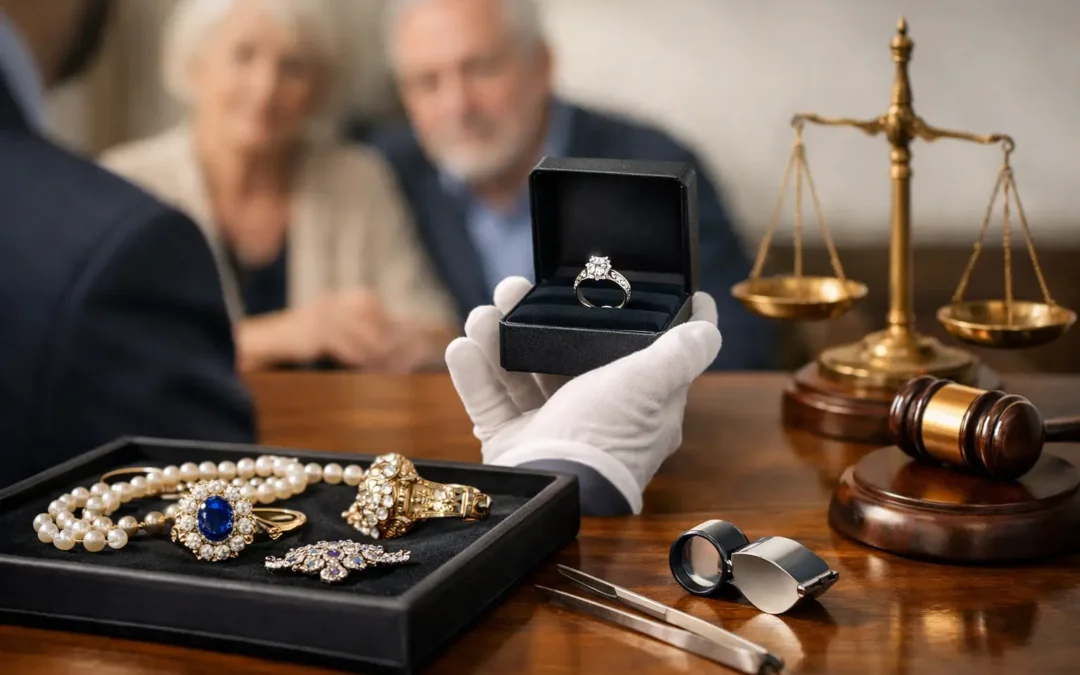
A jewellery box found in a bedside drawer can contain anything from costume pieces of modest value to signed gold jewellery, diamonds, antique mourning jewellery or an important family heirloom. That uncertainty is precisely why a probate jewellery auction should begin with informed assessment rather than a quick offer. For executors and families, the objective is not simply to clear a property. It is to identify what merits proper attention, establish a realistic market value and sell in a way that is accountable to the estate.
Jewellery is particularly easy to misjudge. A plain-looking ring may carry a valuable hallmark or contain an untreated coloured stone; an attractive piece may have sentimental importance but limited auction demand. Age, maker, materials, condition and current buyer appetite all matter. A specialist auctioneer brings these considerations together before advising whether a piece is suitable for sale.
Why a probate jewellery auction needs specialist valuation
Probate values and auction estimates serve different purposes, though both require careful examination. A probate valuation provides a defensible figure for estate administration and, where relevant, inheritance tax reporting. An auction estimate is a guide to the likely hammer price in a particular sale, taking account of comparable results, condition and the likely bidding audience.
Neither figure should be based on the original purchase price, an insurance schedule from many years ago or an online search for a superficially similar item. Jewellery markets are selective. Gold prices can materially influence the value of unbranded pieces, while signed jewellery, rare gemstones, period design and desirable provenance can place an item well above its intrinsic metal value.
A proper inspection considers hallmarks, maker’s marks, metal fineness, stone measurements, apparent treatments, setting, wear and any alterations. Where appropriate, a valuer may recommend gemmological testing, research into a named maker, or consultation of accompanying certificates and receipts. Original boxes, papers and previous valuation documents should be retained, even if they prove out of date, as they may assist with identification and cataloguing.
For executors, this process also creates a clear record. It helps demonstrate that assets have been reviewed responsibly and that decisions to sell, retain or distribute jewellery have been made on sound advice.
What belongs in auction and what may not
Not every item of probate jewellery belongs in a specialist sale. That is not a failure of the item or the estate. It is simply a question of matching the object to the right market and ensuring that selling costs are proportionate to likely returns.
Fine diamond jewellery, coloured stones, antique and period jewels, high-quality gold, silver and platinum pieces, signed designs, estate jewellery and collectable watches will often be appropriate for auction. Individual items of lower value may be grouped into a jewellery lot where this gives buyers a clear opportunity and keeps the sale practical.
There are occasions when an alternative route is more sensible. Broken gold that has little design or antique value may be better considered for its scrap content. A modern item with a known retail replacement value but weak secondary demand may not meet expectations at auction. Conversely, a modest-looking brooch or ring should never be treated as scrap before it has been examined. The difference can be substantial where craftsmanship, rarity or a maker’s signature is present.
The best advice is candid. An experienced auctioneer will explain both the opportunities and the limitations, rather than attaching an ambitious estimate merely to secure the consignment.
Preparing inherited jewellery for sale
Families often feel pressure to sort a house quickly, particularly where a property sale is pending. Jewellery deserves to be set aside before clearance work begins. Small items are easily overlooked in drawers, sewing boxes, handbags, desks, old tins and pockets of clothing. It is prudent to check carefully and to keep all items together in a secure place.
Avoid polishing, repairing or separating pieces before they have been assessed. Aggressive cleaning can damage enamel, pearls, patina and delicate settings. Replacing a worn clasp, resizing a ring or resetting a stone may seem helpful, but alterations can affect originality and saleability. A light, professional clean may be appropriate later, but this should follow specialist advice.
If jewellery has been divided informally among relatives, record what has been taken and seek agreement before consigning the remaining pieces. Executors have a duty to act for the estate as a whole, and a transparent process can prevent avoidable disagreement. Photographs taken before collection, together with a written inventory and valuation, are useful safeguards.
Where there are boxes, certificates, service papers for watches or letters explaining family ownership, keep them with the relevant item. Provenance does not guarantee a premium, but credible supporting material can strengthen a catalogue description and give bidders greater confidence.
How the auction process protects the estate
Once jewellery is accepted for sale, each suitable piece is catalogued with descriptions designed to answer the questions serious buyers will ask. The catalogue should identify materials, marks, dimensions, approximate stone weights where possible, condition and any relevant maker, period or provenance. Clear photography is equally important. Buyers online need to see the design, setting, hallmarks and overall condition before deciding whether to bid.
An estimate is then set at a level intended to attract interest, not to deter it. The strongest auction results commonly arise when several informed buyers can see the opportunity and compete. Reserve prices can be discussed where appropriate, but they must remain commercially realistic. A reserve set too close to an optimistic expectation can prevent a sale altogether.
The sale venue and timing matter. Jewellery offered within a well-promoted specialist auction can reach private collectors, dealers, jewellers and international online bidders. This is one advantage of selling through an established auction house rather than accepting the first private approach. The market is allowed to test the item openly, with bids recorded and the hammer price established through competition.
At John Nicholson’s, jewellery is presented to a broad buying audience through live and online auction channels, while consignors receive clear guidance on estimates, reserves, commission and settlement. For an estate, that combination of specialist handling and documented process is often as valuable as the final price.
Understanding estimates, reserves and net proceeds
A common source of confusion is the difference between an estimate, hammer price and the amount returned to the estate. The estimate is an informed guide, usually expressed as a range. It is not a guaranteed sale price, nor is it the final sum paid by the successful bidder.
The hammer price is the amount at which the auctioneer brings the bidding to a close. Buyers pay a buyer’s premium in addition to that amount under the sale terms. From the hammer price, the seller’s agreed commission and any relevant charges are deducted before net proceeds are remitted to the estate.
Executors should ask for the terms in writing before consigning. They should understand the proposed estimate, reserve if any, seller’s commission, insurance arrangements, photography or specialist report charges where applicable, and the expected timetable for sale and payment. This is not administrative detail. Clear terms allow executors to account accurately to beneficiaries and make comparisons between selling options on a like-for-like basis.
It is also wise to be realistic about outcomes. An auction is a live market, and demand can exceed expectations or fall short of them. A well-researched estimate improves the prospects of fair competition, but it cannot remove market risk. What a reputable auctioneer can provide is sound valuation, appropriate exposure, honest advice and a transparent record of the sale.
Questions executors should ask before consigning
Before choosing an auctioneer, establish whether jewellery is assessed by a relevant specialist, how lots are marketed and which buyer base the sale reaches. Ask whether named makers, hallmarks and certificates will be properly recorded, and whether higher-value gemstones may require additional reporting.
It is equally reasonable to ask how unsold lots are handled. Some items may be reoffered, revised in estimate, grouped differently or returned. The right course depends on the piece and the reason it did not sell. A considered recommendation is preferable to repeatedly offering the same lot without changing the strategy.
A probate jewellery sale need not feel hurried or impersonal. With a careful inventory, an accurate valuation and an auction plan suited to the material, executors can convert inherited jewellery into properly accounted estate funds while giving significant pieces the market attention they deserve.