
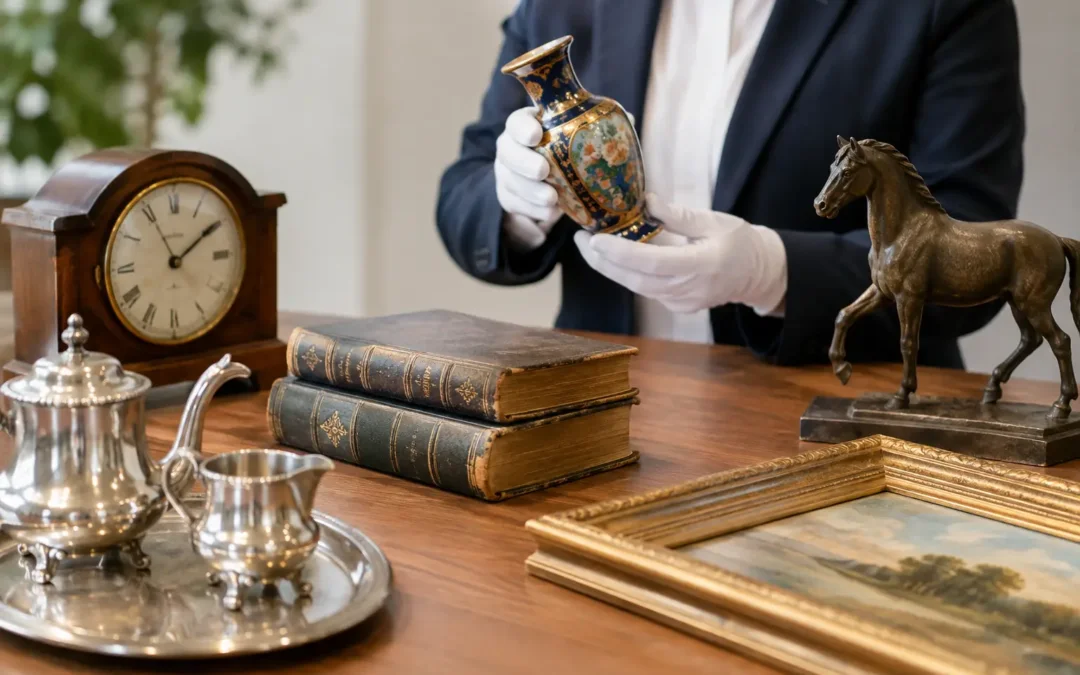
A vintage collectables auction UK sale is not simply a means of clearing a house or dispersing a collection. It is a market event in which the right object, accurately identified and sensibly estimated, is placed before buyers who understand its appeal. For sellers, that can mean a stronger result than a private sale. For buyers, it offers a transparent route to objects with age, character and collecting potential.
The category is broad. It can include twentieth-century ceramics, studio pottery, toys, advertising signs, vintage cameras, fountain pens, costume jewellery, sporting memorabilia, luggage, design-led furniture, vinyl records and ephemera. Yet no two items should be treated alike. A familiar name can help, but condition, rarity, completeness, provenance and current demand often decide whether a lot attracts modest interest or determined competition.
What makes a vintage collectable saleable?
Age alone does not create value. A 1960s object may be vintage, but its commercial appeal depends on who wants it, how many comparable examples survive and whether it retains the details collectors seek. Original finishes, maker’s marks, packaging, accessories and paperwork can all matter.
Consider a vintage camera. A scarce model in working order, with its correct lens, case and instruction booklet, may appeal to both a collector and a photographer. The same camera with corrosion, a damaged shutter or replacement parts may still be saleable, but it needs a different estimate and a more precise catalogue description. The market is rarely forgiving of overstatement.
Condition is particularly important in collectables because many items were made to be used. Toys have been played with, posters have been pinned to walls and records have been handled repeatedly. Honest wear is often acceptable. Damage, restoration, missing components and later alterations must be identified because they affect value and buyer confidence.
Provenance can add another layer of interest. A family history, original receipt, exhibition label or archive of photographs may establish ownership, date an item or connect it to a notable maker or event. Such material should be retained and shown to the valuer. It may not transform every object into a major lot, but it can give buyers useful assurance.
Preparing for a vintage collectables auction UK sale
The most productive first step is an informed valuation. Avoid cleaning, polishing, repairing or disposing of boxes and associated paperwork before seeking advice. A well-intentioned polish can remove an original surface; an inexpensive box can prove crucial to a toy, watch, pen or piece of jewellery. Equally, a small group of apparently miscellaneous items may contain a more valuable specialist object.
A valuer will assess the material, maker, date, condition and likely market. They will also consider where the item is best offered. Some vintage collectables belong in a dedicated specialist sale, where the catalogue reaches focused buyers. Others perform well in a general antiques auction, particularly if they appeal to decorators, dealers and private purchasers as well as collectors.
It is sensible to gather any available information before the appointment. This might include purchase invoices, old valuations, family notes, service records, certificates, photographs and a clear account of where the item has been kept. Do not worry if these records are incomplete. Auction specialists are accustomed to working from the object itself, but supporting documentation can sharpen identification and catalogue the lot more effectively.
Estimates are market guidance, not guarantees
An auction estimate is a considered indication of the likely hammer-price range before buyer’s premium and other charges. It is based on recent comparable sales, condition, desirability, scarcity and the auctioneer’s assessment of current demand. It is not a promise, and it should not be confused with an insurance valuation or a retail asking price.
A realistic estimate is commercially useful. It encourages early interest, gives bidders confidence that the lot has been judged fairly and can create the competition that produces a stronger hammer price. Setting an estimate too high may deter the very bidders needed to establish momentum. Setting it too low without good reason may create concern about condition or authenticity.
A reserve price may be appropriate for certain consignments. This is the confidential minimum at which the auctioneer is authorised to sell, subject to the agreed terms. It should be discussed candidly. A reserve protects the seller, but an unrealistic one can leave a desirable item unsold and may make a later sale more difficult.
Catalogue presentation and the right audience
The catalogue is the commercial case for a lot. It should identify the item accurately, state dimensions where relevant, record marks and describe condition with appropriate clarity. For a specialist object, the difference between a broad label and a precise attribution can be considerable. A named designer, production period, edition number or factory mark may determine who sees the lot and how they value it.
Photography is equally important. Online bidding has widened the audience for regional auction houses, enabling collectors throughout the UK and overseas to inspect catalogues and bid remotely. Clear images should show the overall object as well as signatures, labels, serial numbers, decoration and significant condition points. Buyers cannot handle an item through a screen, so accuracy in both words and images matters.
There is a balance to strike. A catalogue entry should not pretend that a modest object is rare, but neither should it bury an important detail under vague wording. The strongest descriptions are factual, properly researched and proportionate to the lot. This is where specialist knowledge has practical value rather than merely decorative value.
For sellers in Surrey and the wider south of England, John Nicholson’s combines traditional saleroom expertise with live and online bidding channels. That wider exposure can be especially relevant for niche categories, where the best buyer may not be local but may be prepared to bid decisively when the catalogue and condition report provide sufficient confidence.
What buyers should examine before bidding
Buyers should read the full lot description, examine every available image and request a condition report when a detail is unclear. In vintage collectables, small points can make a substantial difference: whether a mechanism works, whether a lid is original, whether a poster has been trimmed, or whether a toy has its correct wheels, key or accessories.
It is also wise to distinguish between the hammer price and the total cost. Buyer’s premium, VAT where applicable, packing, postage or collection arrangements all form part of the purchase decision. A sensible maximum bid should be calculated before the auction begins, particularly when bidding online, where the pace of a competitive lot can be quick.
Collectors should buy with their own criteria in mind. Some pursue untouched examples, some value rarity above condition, and others buy for display or practical use. There is no single correct approach, but the price paid should reflect the item actually offered, not an idealised version of it. A restored piece can be an enjoyable and worthwhile purchase if restoration is disclosed and the bidding recognises it.
Timing, grouping and disposal decisions
A collection does not always need to be sold lot by lot. Grouping can work well for lower-value items, related ephemera or material that benefits from being offered as a complete run. Conversely, a potentially important object should not be hidden in a mixed lot merely for convenience. The auctioneer’s role is to judge the route most likely to encourage competition while keeping cataloguing and selling costs proportionate.
Timing can matter, although it should not be exaggerated. Strong material attracts interest in most seasons when it is properly marketed. A specialised sale date may be preferable where a category has a dedicated following, while a general sale can be right for decorative vintage pieces with broad appeal. The condition of the market, the quality of comparable consignments and the available marketing period all deserve consideration.
Executors and families handling an estate should resist the pressure to make instant decisions. Photograph rooms and contents before removing items, set aside documents and keep related objects together. A watch might be in one drawer, its papers in another and its original box in a loft. Once separated, that useful association can be lost.
The same discipline helps collectors who are downsizing. Identify the pieces that merit individual attention, but be realistic about objects whose value lies mainly in their usefulness or visual charm. An auction is efficient when the sale strategy reflects the market rather than sentiment alone.
The best time to seek advice is before the house is cleared, the collection is divided or the polish is applied. A careful valuation gives each object its proper chance, whether it proves to be a modest but attractive lot or a collectable for which serious bidders are waiting.