
A sculpture can be admired for decades without its owner knowing whether it is a decorative object, a recognised work, or a piece with a serious auction market. When you consign sculpture to an auction house, the question is not simply what it might be worth. It is whether the work can be identified, properly catalogued, placed before the right buyers and offered at a level that encourages confident bidding.
Sculpture is a broad field. A nineteenth-century bronze, a twentieth-century studio ceramic, a marble bust, a carved ivory figure, a contemporary edition and a garden statuary fragment all require different knowledge, marketing and buyer networks. A considered valuation is therefore the sensible first step before committing to a sale.
What makes sculpture suitable for auction?
Auction is particularly effective where a sculpture has artistic merit, recognised authorship, quality of manufacture, rarity or a compelling history of ownership. It can also be the right route for objects that are difficult to value by retail comparison, especially where several collectors may compete for the same lot.
Signed bronzes, works by established British and European sculptors, Oriental and Islamic works of art, carved stone, terracotta, ceramics and significant modern pieces may all perform well in the appropriate specialist sale. However, a signature alone does not establish value. It must be assessed alongside quality, condition, medium, dimensions, subject matter, casting or production method, and the extent to which the market recognises the artist.
The distinction between an original bronze, a lifetime cast, an authorised posthumous cast and a later reproduction is commercially significant. The same is true of editions in contemporary sculpture. An edition number, foundry mark or artist’s stamp can materially affect how a lot is described and the level of bidder interest it attracts.
Not every sculpture belongs in an auction. Decorative pieces without a maker, extensive damage, very large garden ornaments or items with a narrow local market may be better suited to a different selling route. A reputable auctioneer should explain this plainly rather than encourage a sale that is unlikely to meet expectations.
How to consign sculpture to an auction house
The process usually begins with an initial appraisal. Clear photographs are useful: take overall views from several angles, close images of signatures, stamps, labels and foundry marks, and photographs of any damage or restoration. Include measurements and, where possible, details of where and when the sculpture was acquired.
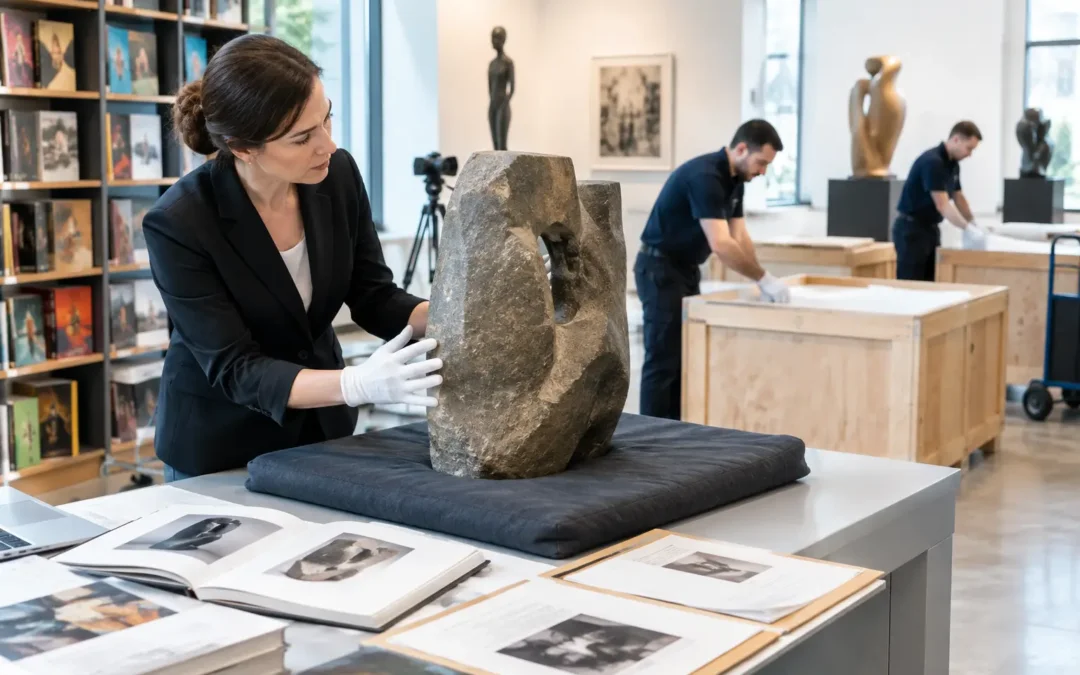
An in-person valuation is often necessary. Surface quality is central to sculpture, and it is not always possible to judge patination, casting quality, repairs, wear, weight or structural stability from images alone. For marble, alabaster and ceramic works, small chips and old repairs can be particularly relevant. For bronzes, an auction specialist will look closely at the casting, colour, surface rubbing, joins and any evidence of later alteration.
Once accepted for sale, the auction house will agree an estimate and reserve price with the consignor. The estimate is a public guide designed to position the lot in the market. The reserve is confidential and represents the minimum hammer price at which the work may be sold, subject to the agreed terms. These figures should be realistic rather than aspirational. An attractive estimate can create early interest and bidding momentum; an ambitious reserve may prevent a sale altogether.
You should also receive clear information on the seller’s commission, any catalogue photography, insurance, transport, storage and potential charges for unsold lots. These costs vary according to the object and the sale, particularly for fragile, unusually heavy or high-value sculpture. Asking for the terms in writing avoids uncertainty later.
Provenance can strengthen the catalogue entry
Provenance means the ownership history of a work. It need not be grand to be useful. A family receipt, an old exhibition catalogue, correspondence with an artist, a gallery label, an inherited inventory or photographs showing the sculpture in a long-held collection can all help establish its history.
For higher-value works, provenance may support attribution and reassure prospective bidders. It can also assist with questions around title, export regulations and cultural property. This is especially relevant for ancient objects, ivory, archaeological material and works incorporating protected materials. Such lots may require specialist review and supporting documentation before they can be offered.
Do not clean, polish or attempt repairs before the valuation without advice. Owners sometimes believe a brighter bronze or freshly cleaned stone will be more appealing. In practice, over-cleaning can remove an original patina, while amateur restoration can reduce both confidence and value. Retaining old labels, bases and mounts is equally important, even when they appear insignificant.
Choosing the right sale matters
A specialist auction is not merely a date in the calendar. It determines the audience that will see the work, the catalogue context in which it will appear and the bidders most likely to understand its value.
A signed twentieth-century bronze may belong in a fine art sale alongside paintings and other modern works. A Chinese carved hardstone figure could be more appropriately offered in an Asian art auction. A garden urn, architectural fragment or decorative statuary piece may attract stronger interest within a sale of interiors, furniture and decorative arts. The right category helps buyers find a work and compare it with relevant lots.
At John Nicholson’s, this judgement is informed by regular specialist and general auctions, as well as access to live saleroom and online bidding audiences. Online exposure broadens the field of potential buyers, but it does not replace sound cataloguing. Collectors bidding remotely need accurate dimensions, condition reports, high-quality images and a precise description on which to make a decision.
Timing can also affect the result. A work connected to a particular collecting area may benefit from being held for a focused sale rather than entered into the next available auction. Conversely, where a sculpture is decorative and broadly appealing, a well-attended general sale may provide an efficient route to market. The best choice depends on the object, its value range and current demand.
Setting a realistic estimate and reserve
Owners naturally look for the highest possible figure, particularly where a sculpture has been inherited or purchased years earlier. Yet auction value is not a fixed measure of sentimental importance, insurance value or replacement cost. It is the price buyers are prepared to pay in a defined market on a given day.
An auctioneer will consider comparable results, although direct comparisons must be used carefully. Two casts of the same model can vary substantially in date, condition, size, patina and provenance. A lesser-known artist may achieve an excellent result for an exceptional subject, while a more familiar name may struggle if the work is damaged, overproduced or offered at an unrealistic level.
The estimate should invite bidders into the process. A reserve set too close to the top of the estimate may leave little room for competition. A lower reserve offers more protection against the lot failing to sell, but it requires confidence in the market and in the auction house’s ability to reach appropriate bidders. There is no universal formula; the decision should reflect the owner’s appetite for certainty, the quality of the work and the evidence available.
Preparing the sculpture for collection
Once consigned, the practical task is safe delivery. Sculpture can be deceptively vulnerable. Projecting limbs, handles, fingers, bases and applied details are often at risk during handling. Heavy bronzes may require specialist lifting, while stone and plaster works can be damaged by inappropriate packing or sudden changes in temperature.
Do not rely on household packing materials for a valuable or fragile work. Seek guidance before moving it, particularly if the sculpture is mounted, large-scale or installed outdoors. If it has been in a garden, avoid aggressive cleaning and provide the auction house with a clear account of its exposure to weather, repairs and any movement from its original setting.
A good consignment is built on accurate information, careful handling and sensible expectations. The strongest results tend to follow when the sculpture is correctly identified, honestly condition-reported and offered to the market through the sale that best suits it. Begin with a professional valuation, keep every piece of supporting history you can find, and allow the object itself to determine the selling strategy.